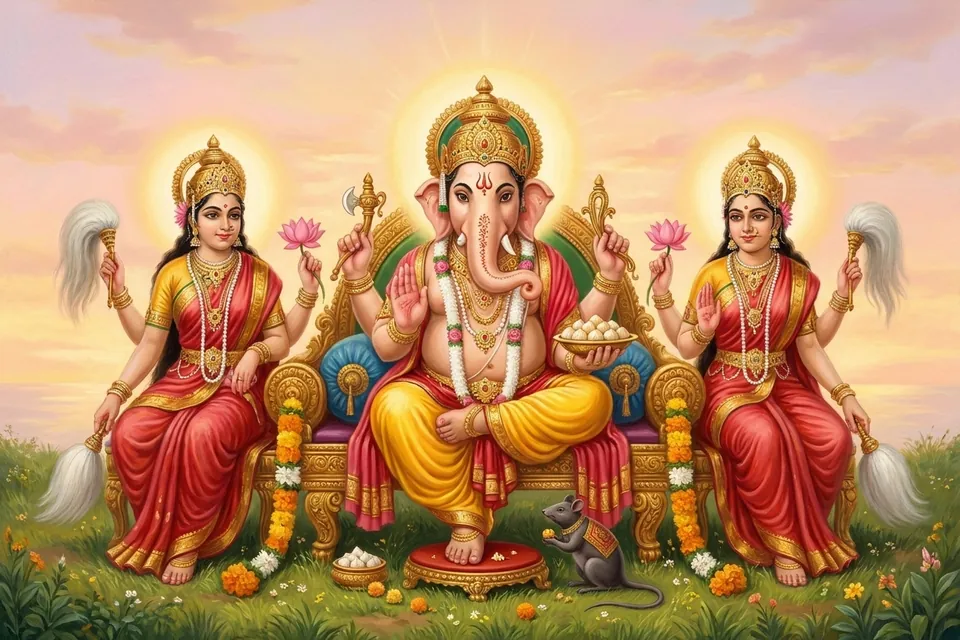
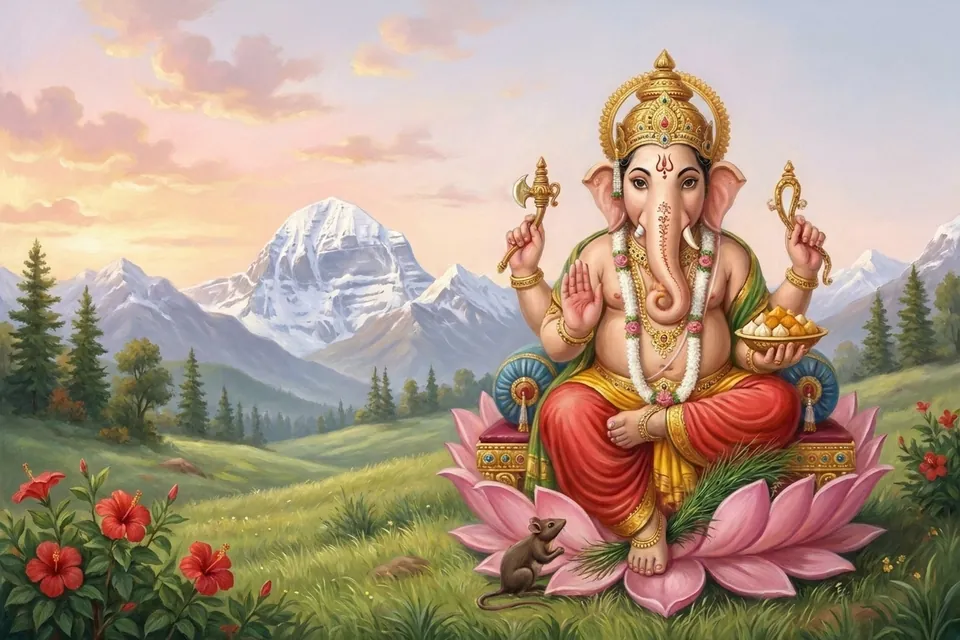
Stotra · Bhagwan Ganesha
Ganapati Suktam
गणपति सूक्तम्
Ganapati Suktam is a Sanskrit stotra to Bhagwan Ganesha, the Rigveda mantra "Gananam tva ganapatim havamahe", chanted here in ghana patha.
Recited on: Start of any puja or havan, Ganesh Chaturthi, Sankashti Chaturthi, Vinayaka Chaturthi, Griha pravesh, Beginning a new undertaking, Wednesday worship
- Shloka 1
ओं ग॒णाना॓ं त्वा ग॒णप॑तिग्ं हवामहे क॒विं क॑वी॒नामु॑प॒मश्र॑वस्तमम् । ज्ये॒ष्ठ॒राजं॒ ब्रह्म॑णां ब्रह्मणस्पत॒ आ नः॑ शृ॒ण्वन्नू॒तिभि॑स्सीद॒ साद॑नम् ॥
Om ga॒nana॓m tva ga॒napa॑tigm havamahe ka॒vim ka॑vi॒namu॑pa॒mashra॑vastamam, jye॒shtha॒rajan॒ brahma॑nam brahmanaspata॒ Aa nah॑ shri॒nvannu॒tibhi॑ssida॒ sada॑nam.
Om. We call upon you, Ganapati, master of the hosts, the seer among seers, whose fame is the highest of all. O eldest king of sacred prayers, O Brahmanaspati, listening to us, come with your protections and take your seat here.
Word by word
- 2
ग॒णाना॓ं त्वा त्वा ग॒णाना॓ं ग॒णाना॓ं त्वा ग॒णप॑तिं ग॒णप॑तिं त्वा ग॒णाना॓ं ग॒णाना॓ं त्वा ग॒णप॑तिम् ॥
Ga॒nana॓m tva tva ga॒nana॓m ga॒nana॓m tva ga॒napa॑tim ga॒napa॑tim tva ga॒nana॓m ga॒nana॓m tva ga॒napa॑tim.
The words "you, Ganapati of the hosts" are chanted in the ghana pattern, forward and back. The meaning is: you, the master of all the hosts.
Word by word
- 3
त्वा॒ ग॒णप॑तिं ग॒णप॑तिं त्वा त्वा ग॒णप॑तिग्ं हवामहे हवामहे ग॒णप॑तिं त्वा त्वा गणप॑तिग्ं हवामहे । ग॒णप॑तिग्ं हवामहे हवामहे ग॒णप॑तिं ग॒णप॑तिग्ं हवामहे क॒विं क॒विग्ं ह॑वामहे ग॒णप॑तिं ग॒णप॑तिग्ं हवामहे क॒विम् । ग॒णप॑ति॒मिति॑ग॒ण-प॒ति॒म् ॥
Tva॒ ga॒napa॑tim ga॒napa॑tim tva tva ga॒napa॑tigm havamahe havamahe ga॒napa॑tim tva tva ganapa॑tigm havamahe, ga॒napa॑tigm havamahe havamahe ga॒napa॑tim ga॒napa॑tigm havamahe ka॒vim ka॒vigm ha॑vamahe ga॒napa॑tim ga॒napa॑tigm havamahe ka॒vim, ga॒napa॑ti॒miti॑ga॒na-pa॒ti॒m.
We call upon you, Ganapati. We call upon Ganapati, the seer. In the word-by-word reading, gaṇapatim is split as gaṇa (host) and pati (master).
Word by word
- 4
ह॒वा॒म॒हे॒ क॒विं क॒विग्ं॒ ह॑वामहे हवामहे क॒विं क॑वी॒नान्क॑वी॒नां क॒विग्ं ह॑वामहे हवामहे क॒विन्क॑वी॒नाम् ॥
Ha॒va॒ma॒he॒ ka॒vim ka॒vign॒ ha॑vamahe havamahe ka॒vim ka॑vi॒nanka॑vi॒nam ka॒vigm ha॑vamahe havamahe ka॒vinka॑vi॒nam.
We call upon the seer, the seer among seers. These words are repeated in the ghana pattern.
Word by word
- 5
क॒विन्क॑वी॒नान्क॑वी॒नां क॒विन्क॒विं क॑वी॒नामु॑प॒मश्र॑वस्तममुप॒मश्र॑वस्तमन्क॑वी॒नां क॒विन्क॒विं क॑वी॒नामु॑प॒मश्र॑वस्तमम् ॥
Ka॒vinka॑vi॒nanka॑vi॒nam ka॒vinka॒vim ka॑vi॒namu॑pa॒mashra॑vastamamupa॒mashra॑vastamanka॑vi॒nam ka॒vinka॒vim ka॑vi॒namu॑pa॒mashra॑vastamam.
He is the seer among seers, whose fame is the highest of all.
Word by word
- 6
क॒वी॒नामु॑प॒मश्र॑वस्तममुप॒मश्र॑वस्तमं कवी॒नान्क॑वी॒नामु॑प॒मश्र॑वस्तमम् । उ॒प॒मश्र॑वस्तम॒मित्यु॑प॒मश्र॑वः-त॒म॒म् ॥
Ka॒vi॒namu॑pa॒mashra॑vastamamupa॒mashra॑vastamam kavi॒nanka॑vi॒namu॑pa॒mashra॑vastamam, u॒pa॒mashra॑vastama॒mityu॑pa॒mashra॑vah-ta॒ma॒m.
Among seers, his fame is the highest. In the word-by-word reading, upamaśravastamam is split as upamaśravaḥ (highest fame) and tamam (the most).
Word by word
- 7
ज्ये॒ष्ठ॒राज॒ं ब्रह्म॑णा॒ं ब्रह्म॑णां ज्येष्ठ॒राज॑ं ज्येष्ठ॒राज॒ं ब्रह्म॑णां ब्रह्मणो ब्रह्मणो॒ ब्रह्म॑णां ज्येष्ठ॒राज॑ं ज्येष्ठ॒राज॒ं ब्रह्म॑णां ब्रह्मणः । ज्ये॒ष्ठ॒राज॒मिति॑ज्येष्ठ राजम्॓ ॥
Jye॒shtha॒raja॒m brahma॑na॒m brahma॑nam jyeshtha॒raja॑m jyeshtha॒raja॒m brahma॑nam brahmano brahmano॒ brahma॑nam jyeshtha॒raja॑m jyeshtha॒raja॒m brahma॑nam brahmanah, jye॒shtha॒raja॒miti॑jyeshtha rajam॓.
He is the eldest king of the sacred prayers, of the sacred word. In the word-by-word reading, jyeṣṭharājam is split as jyeṣṭha (eldest) and rājam (king).
Word by word
- 8
ब्रह्म॑णां ब्रह्मणो ब्रह्मणो॒ ब्रह्म॑णा॒ं ब्रह्म॑णां ब्रह्मणस्पते पते ब्रह्मणो॒ ब्रह्म॑णा॒ं ब्रह्म॑णां ब्रह्मणस्पते ॥
Brahma॑nam brahmano brahmano॒ brahma॑na॒m brahma॑nam brahmanaspate pate brahmano॒ brahma॑na॒m brahma॑nam brahmanaspate.
Of the sacred prayers, of the sacred word: O Brahmanaspati, O master.
Word by word
- 9
ब्र॒ह्म॒ण॒स्प॒ते॒ प॒ते॒ ब्र॒ह्म॒णो॒ ब्र॒ह्म॒ण॒स्प॒त॒ आप॑ते ब्रह्मणो ब्रह्मणस्पत॒ आ । प॒त॒ आ प॑तेपत॒ आनो॑न॒ आप॑ते पत॒ आन॑ः ॥
Bra॒hma॒na॒spa॒te॒ pa॒te॒ bra॒hma॒no॒ bra॒hma॒na॒spa॒ta॒ Aapa॑te brahmano brahmanaspata॒ Aa, pa॒ta॒ Aa pa॑tepata॒ Aano॑na॒ Aapa॑te pata॒ Aana॑h.
O Brahmanaspati, O master, come to us.
Word by word
- 10
आनो॑न॒ आन॑श्शृ॒ण्वन्छृ॒ण्वन्न॒ आन॑श्शृ॒ण्वन् । न॒ श्शृ॒ण्वन्छृ॒ण्वन्नो॑न श्शृ॒ण्वन्नू॒तिभि॑रू॒तिभि॑श्शृ॒ण्वन्नो॑नश्शृ॒ण्वन्नू॒तिभिः॑ ॥
Aano॑na॒ Aana॑shshri॒nvanchhri॒nvanna॒ Aana॑shshri॒nvan, na॒ shshri॒nvanchhri॒nvanno॑na shshri॒nvannu॒tibhi॑ru॒tibhi॑shshri॒nvanno॑nashshri॒nvannu॒tibhih॑.
Come to us, listening to us, with your protections.
Word by word
- 11
शृ॒ण्वन्नू॒तिभि॑रू॒तिभि॑श्शृ॒ण्वन्छृ॒ण्वन्नू॒तिभि॑स्सीद सीदो॒तिभि॑श्शृ॒ण्वन्छृ॒ण्वन्नू॒तिभि॑स्सीद ॥
Shri॒nvannu॒tibhi॑ru॒tibhi॑shshri॒nvanchhri॒nvannu॒tibhi॑ssida sido॒tibhi॑shshri॒nvanchhri॒nvannu॒tibhi॑ssida.
Listening to us, with your protections, be seated.
Word by word
- 12
ऊ॒तिभि॑स्सीद सीदो॒तिभि॑रू॒तिभि॑स्सीद॒ साद॑न॒ग्॒ं साद॑नग्॒ं सीदो॒तिभि॑रू॒तिभि॑स्सीद॒ साद॑नम् । ऊ॒तिभि॒रित्यू॒ति-भि॒ः ॥
U॒tibhi॑ssida sido॒tibhi॑ru॒tibhi॑ssida॒ sada॑na॒g॒m sada॑nag॒m sido॒tibhi॑ru॒tibhi॑ssida॒ sada॑nam, u॒tibhi॒rityu॒ti-bhi॒h.
With your protections, sit in this seat. In the word-by-word reading, ūtibhiḥ is split as ūti (protection) and bhiḥ (with).
Word by word
- 13
सी॒द॒साद॑न॒ग्॒ं साद॑नग्॒ं सीद सीद॒ साद॑नम् । साद॑न॒मिति॒ साद॑नम् ॥
Si॒da॒sada॑na॒g॒m sada॑nag॒m sida sida॒ sada॑nam, sada॑na॒miti॒ sada॑nam.
Sit in this seat. The word sādanam (seat) is stated on its own to close the chant.
Word by word