
Temple · Belur, Karnataka
Chennakesava temple
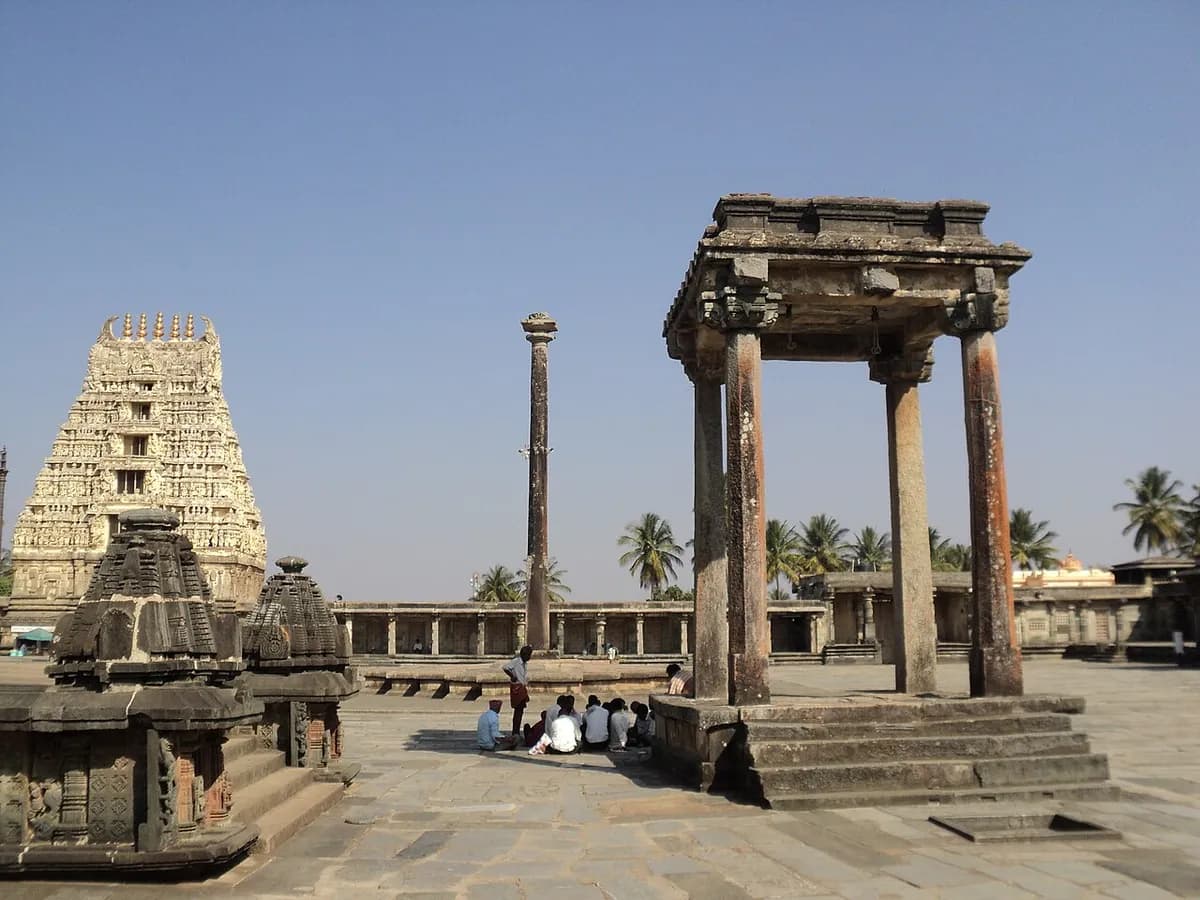
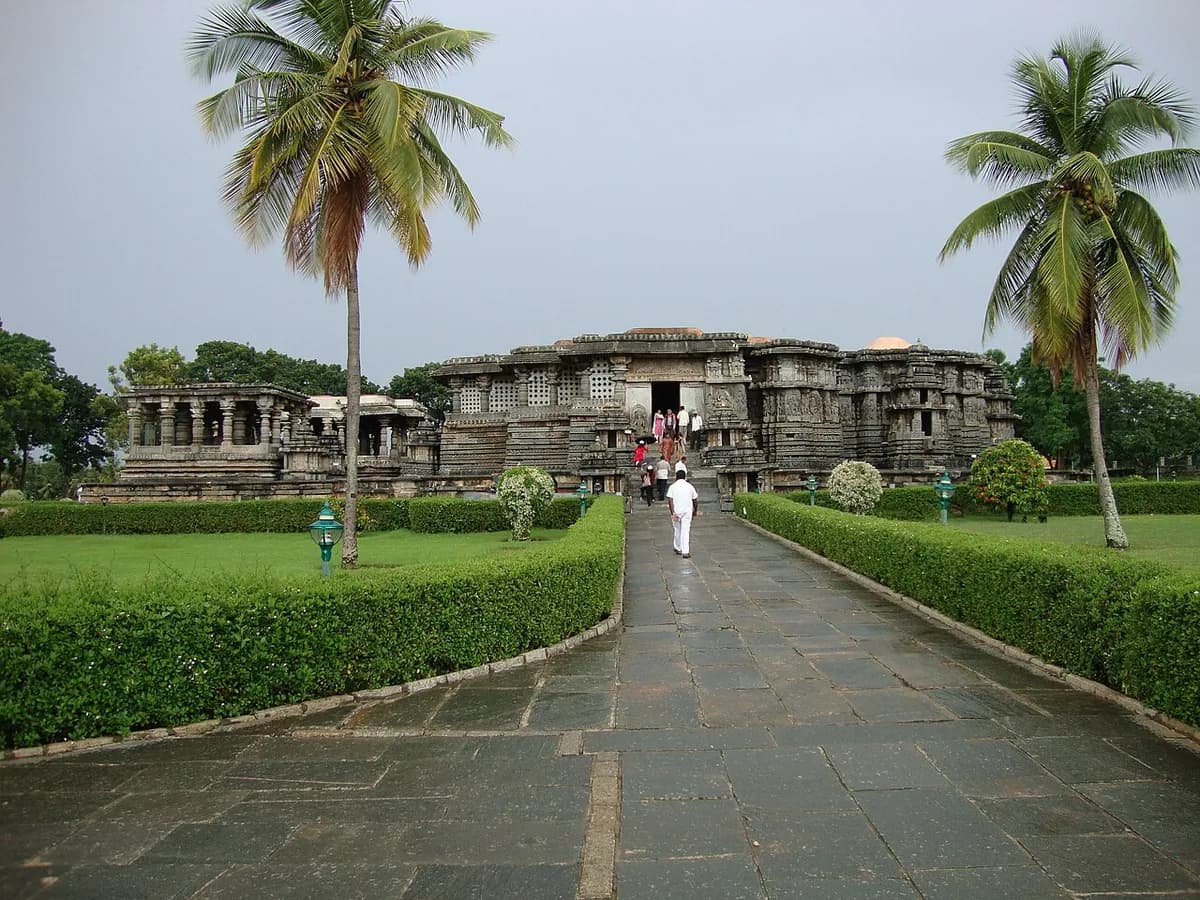
Chennakesava temple stands on the banks of the Yagachi River in Belur, Hassan district, Karnataka. King Vishnuvardhana commissioned it in 1117 CE. It is a Vaishnava temple and still a place of worship.
- Chennakesava temple
- Chennakesava temple
- Chennakesava temple
- Chennakesava temple
- Chennakesava temple
- Chennakesava temple
- Chennakesava temple
- Vaishnav
- Tradition
- 1117 CE
- Established
Darshan and puja timings
Not checked yet
We have not checked last motorable point, local transport, nearest airport, nearest bus stand and 24 more details from an official source yet. Ask us on WhatsApp before you go.
Temple info and etiquette
- Setting
Riverside
As per en.wikipedia.org
Deities at the temple
- Form
Temple complex
As per en.wikipedia.org
- Tradition
Vaishnav
As per en.wikipedia.org
About the temple
Belur was an early Hoysala Empire capital, and the temple was built here beside the river. The Chennakeshava complex is a walled court of 443.5 feet by 396 feet. Several temples and minor shrines stand inside it. The temple is also called Keshava, Kesava or Vijayanarayana. The Belur complex, with the Hoysaleswara Temple at Halebidu and the Keshava Temple at Somanathapura, was declared a UNESCO World Heritage Site in 2023. The listing is Sacred Ensembles of the Hoysalas.
The main temple is in the middle of the complex and faces east, in front of the gopuram. With later improvements it measures 178 feet by 156 feet. It stands on a platform terrace (jagati) about 3 feet high. The building material is chloritic schist, better known as soapstone. The temple has three entrances, and dvarapalaka doorkeepers are carved on either side of each doorway.
1117 CE: King Vishnuvardhana commissioned the temple. 1175 CE: Ballala II added buildings for the kitchen and grain storage in the southeast corner, and a water tank in the northeast corner. 1381 CE: four central pillars were added in the Vijayanagara Empire era, to support the structure of a damaged temple. 1397: the Vijayanagara Empire added a seven storey brick gopuram, replacing the destroyed gateway. 1774: an officer of Hyder Ali repaired the temple. 1935: parts were cleaned and restored with funds from the Mysore government and grants from the Wadiyar dynasty. Historians have found 118 inscriptions in the complex, dated from 1117 CE to the 18th century. They record the temple's history, grants for its upkeep and later repairs.
The sanctum is square. Inside is the image of Keshava, which inscriptions call Vijayanarayana. It is a vigraha, and Keshava is the presiding deity.
The map coordinates are 13.162861 north and 75.860556 east. Timings not checked yet.
- Established
1117 CE
As per en.wikipedia.org
- Inscriptions
Historians have found 118 inscriptions in the temple complex, dated between 1117 CE to the 18th century, which provide a history of the temple, the grants made to the Chennakeshava temple for its upkeep and the repairs during later times.
As per en.wikipedia.org
- Materials
- chloritic schist
- Soapstone
As per en.wikipedia.org
- Heritage
Unesco world heritage
As per en.wikipedia.org
Questions pilgrims ask
Answered from the checked facts on this page, with their sources below.
We haven't checked the timings from an official source yet. Ask us on WhatsApp before you go.
Nearby
- Kappe Chennigaraya TempleTemple · Under 1 km away
- Andal shrineTemple · Under 1 km away
- Somanayaki shrineTemple · Under 1 km away
- ViranarayanaTemple · Under 1 km away
- Veerabhadra Swamy, Ganapathi, Bhadrakaalamma TemplesTemple · 13 km away
- Guddada Ranganatha SwamyTemple · 16 km away
- Kedareswara TempleTemple · 16 km away
- Shri Bolarameshwara templeTemple · 19 km away
- Udbhava Ganapathi TempleTemple · 20 km away
- Veera Narayana TempleTemple · 20 km away
More on tirth.com
Temples, towns, the panchang and yatras planned with Tirth.


Sources
Report incorrect information · Something here wrong or out of date? Tell us on WhatsApp and we will check it again.