
Vrat · Bhagwan Vishnu
Papankusha Ekadashi
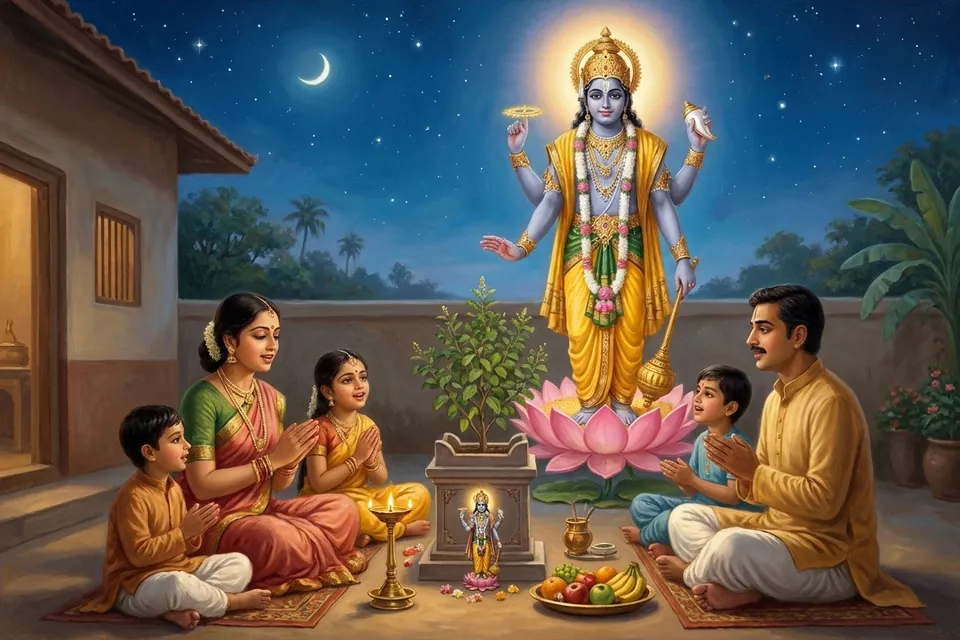
Observed in Ashwin, soon after Dussehra. Bhagwan Vishnu is worshipped in his Padmanabha form.
Papankusha Ekadashi. Ekadashi prevailing at sunrise
Parana: 5:56 AM to 8:17 AM
- VratPapankusha Ekadashi
- VratEkadashi Vrat
- TithiShukla Ekadashi
- WeekdayMonday
- MonthAshwin month
- PeriodBhadra (Vishti karana)
- PeriodChaturmas
Traditionally done
- Keep the Ekadashi fast, if your health allows
- Worship Bhagwan Vishnu and give in charity
- Read the Papankusha Ekadashi katha
- Fast or eat only fruit and milk, if your health allows
- Recite the Vishnu Sahasranama or the day's katha
- Break the fast on Dwadashi in the parana window
- Recite the Vishnu Sahasranama
Traditionally avoided
- Rice and other grains, by Ekadashi custom
- Starting auspicious ceremonies, as tradition advises
- Weddings, which most families hold after Prabodhini Ekadashi
Everything that applies today, and why
Ekadashi Vrat. Ekadashi is the most widely kept Vaishnava fast, twice a month. Tradition holds it dear to Bhagwan Vishnu.
Shukla Ekadashi. The eleventh day of the bright fortnight is kept for Bhagwan Vishnu. Each Ekadashi of the year has its own name and katha.
Monday, Somvar. Monday is linked with the Moon and with Bhagwan Shiva. Many devotees keep a Somvar vrat, especially in Shravana.
Ashwin month. Ashwin holds Pitru Paksha, Sharad Navratri, Dussehra and Sharad Purnima.
Bhadra (Vishti karana). Bhadra is the period of Vishti karana. Tradition avoids it for auspicious beginnings, and Holika Dahan and Rakhi are timed to skip it.
Chaturmas. Chaturmas runs from Devshayani Ekadashi to Prabodhini Ekadashi, while Bhagwan Vishnu is said to rest. Many take a personal vow then.