
Why Nashik Kumbh Mela Is Unique: One River, Two Kunds, Two Sets of Akharas
Tirth editorial · 1 Mar 2026 · 7 min read
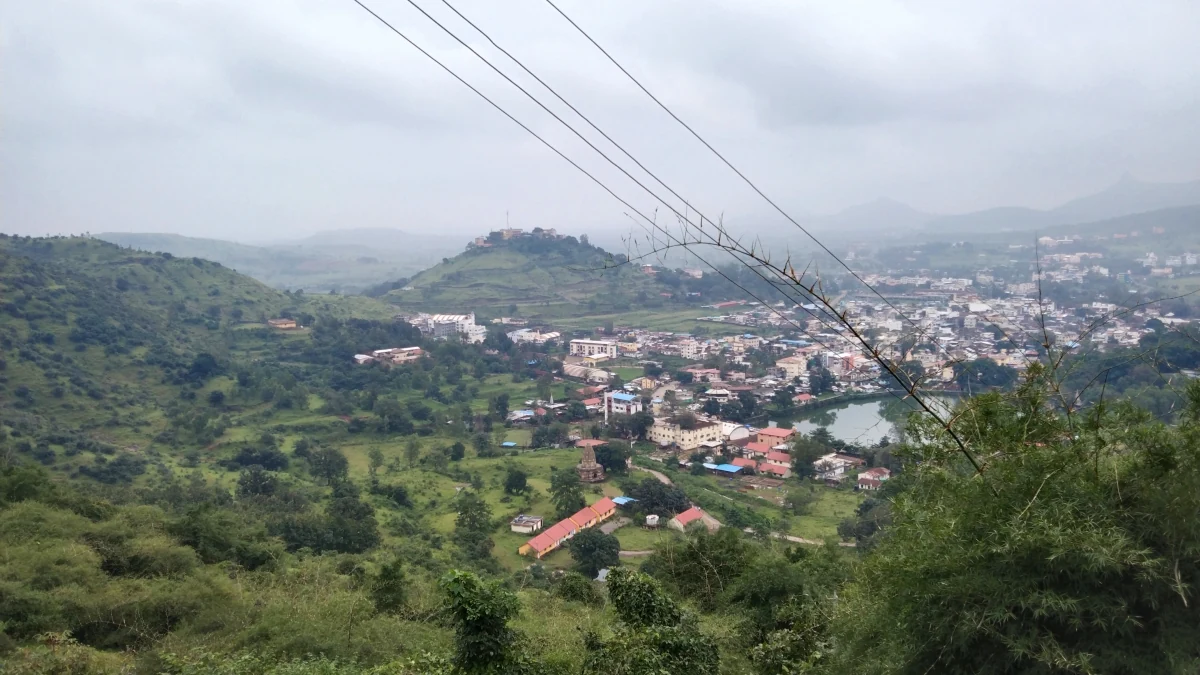
Ask why Nashik Kumbh Mela is unique and the answer is one river, the Godavari, a calendar set by Jupiter in Leo, and akharas that by a long-standing arrangement bathe in two towns, Vaishnava at Nashik and Shaiva at Trimbakeshwar. On 31 October 2026 the Simhastha flag went up at both kunds at the same time, Ramkund in Nashik city and Kushavarta at Trimbakeshwar, about 30 km apart.
For a pilgrim the kund matters most, because on the third snan it decides which day you bathe.
The full plan for the year is in our Nashik Simhastha 2027 complete guide, and the four cities together are in Kumbh Mela 2027.
Why the Nashik Kumbh is called Simhastha, and what Jupiter has to do with it
Simha is Leo. The Nashik district government puts the rule in one line. The Kumbha is held at Nashik and Trimbakeshwar when Jupiter (Brihaspati Dev) is in Leo, with the Sun and Moon in Cancer, and it comes round every 12 years.
The Tirth Panchang shows how closely the calendar follows that rule. Jupiter enters Leo on 31 October 2026, the same day the flag went up.
It does not stay put. Jupiter goes retrograde, slipping into Cancer again on 25 January 2027 and returning to Leo on 26 June 2027. It moves on to Virgo on 26 November 2027, is back in Leo from 28 February 2028 and leaves the sign for good on 24 July 2028, which is the closing date the notices give for the Simhastha period.
So the long Simhastha period is the stretch in which Jupiter keeps coming back to Leo. All three Amrit Snan days fall inside one of its stays, 26 June to 26 November 2027.
The Sun and Moon part of the rule fits the first bath neatly. On 2 August 2027, an Amavasya, the Sun and Moon are together in Cancer while Jupiter is in Leo, just as the district’s formula reads, but by the second bath on 31 August the Sun has already crossed into Leo (Simha Sankranti falls on 17 August 2027). The notified dates come from the Kumbh Mela Plan of the Nashik-Trimbakeshwar Kumbh Mela Authority (NTKMA), not from the formula.
How the Kumbh names work in the other cities is in Ardh Kumbh and Maha Kumbh.
One river, rising on the Brahmagiri hills at Trimbakeshwar
You will read that Nashik has two rivers, or a confluence. The Kumbh here rests on neither.
The Sangam, where the Ganga and Yamuna meet and the Saraswati is held to flow unseen, is at Prayagraj. Nashik’s Kumbh is about where a river begins. The Godavari rises on the Brahmagiri hills at Trimbakeshwar, and the district government calls it Dakshin Ganga, the Ganga of the South. It is said that the river goes underground at Brahmagiri and comes up again at Kushavarta.
The story behind the name is told in the Gautami Mahatmya of the Brahma Purana and in the Koti-rudra-samhita of the Shiva Purana. Rishi Gautama, accused of the sin of killing a cow, asked Bhagwan Shiv to bring Maa Ganga to Trimbak, and she came as the Gautami Godavari while Bhagwan Shiv stayed on as Trimbakeshwar.
The tellings tie Kushavarta to kusha grass, which Gautama is said to have used to lead her out. Some tellings say he dug a channel instead, and who sent the cow, and why, changes from one telling to the next.
The older stories of the city are gathered in why Nashik is spiritually important.
Ramkund and Kushavarta: two kunds, two towns, about 30 km apart
The Simhastha has two official bathing centres in two towns on the Godavari. Ramkund is in Nashik city, and Kushavarta Tirtha is at Trimbakeshwar, beside one of the twelve Jyotirlingas.
For a bather the distance between them is what counts. About 30 km means one kund per snan day.
Ramkund’s own story is in our post on Ramkund, and the Ramkund page has the place itself. For Trimbakeshwar, see the Trimbakeshwar temple page and our story of the Trimbakeshwar Jyotirlinga.
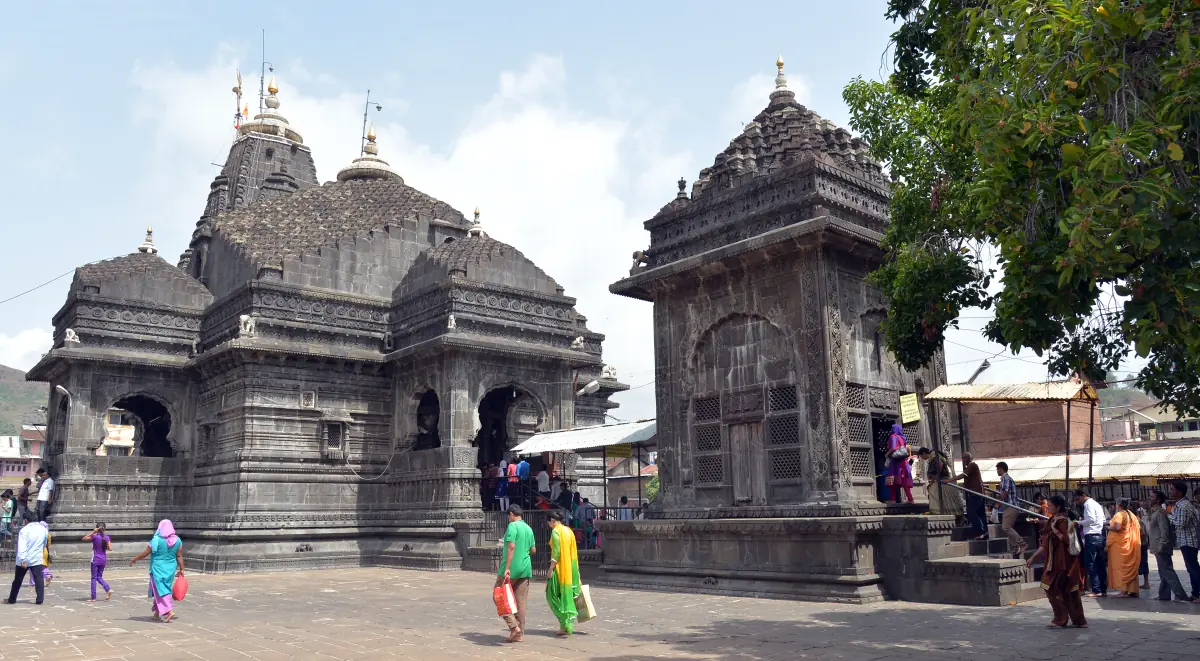
| Bathing centre | Town | Akharas, by long-standing arrangement | Third Amrit Snan, 2027 |
|---|---|---|---|
| Ramkund | Nashik city | Vaishnava | Saturday, 11 September |
| Kushavarta Tirtha | Trimbakeshwar | Shaiva (Sanyasi) and Udasin | Sunday, 12 September |
Why do Vaishnava and Shaiva akharas bathe in different towns at Nashik?
At Prayagraj, Haridwar and Ujjain the akharas bathe together. Nashik splits them.
The Nashik district government’s heritage page gives the reason. Under an arrangement made by the Peshwas after clashes between the two sects, the Vaishnava akharas bathe at Nashik, while the Shaiva (Sanyasi) and Udasin akharas bathe at Trimbakeshwar.
That arrangement is old. A day-by-day plan for 2027 is another matter. As of November 2026 we could find no published plan from the Authority saying which akhara goes to which kund on which day, or in what order, and that plan is what decides each bath.
The baths are called Amrit Snan in the notices, and Shahi Snan is the older name for the same thing.
The 2027 Amrit Snan days, and why your kund decides your date
The flag hoisting (Dhwajarohan) on 31 October 2026 opened the period. The days pilgrims plan around fall between late July and mid September 2027.
| Day | Date | Tithi | Where |
|---|---|---|---|
| Nagar Pradakshina (not a snan; date provisional) | Thursday, 29 July 2027 | Ashadha Krishna Dashami | Nashik |
| First Amrit Snan | Monday, 2 August 2027 | Ashadha Amavasya | Ramkund and Kushavarta |
| Second Amrit Snan | Tuesday, 31 August 2027 | Shravan Amavasya | Ramkund and Kushavarta |
| Third Amrit Snan | Saturday, 11 September 2027 | Bhadrapada Shukla Ekadashi | Ramkund |
| Third Amrit Snan | Sunday, 12 September 2027 | Bhadrapada Shukla Dwadashi | Kushavarta |
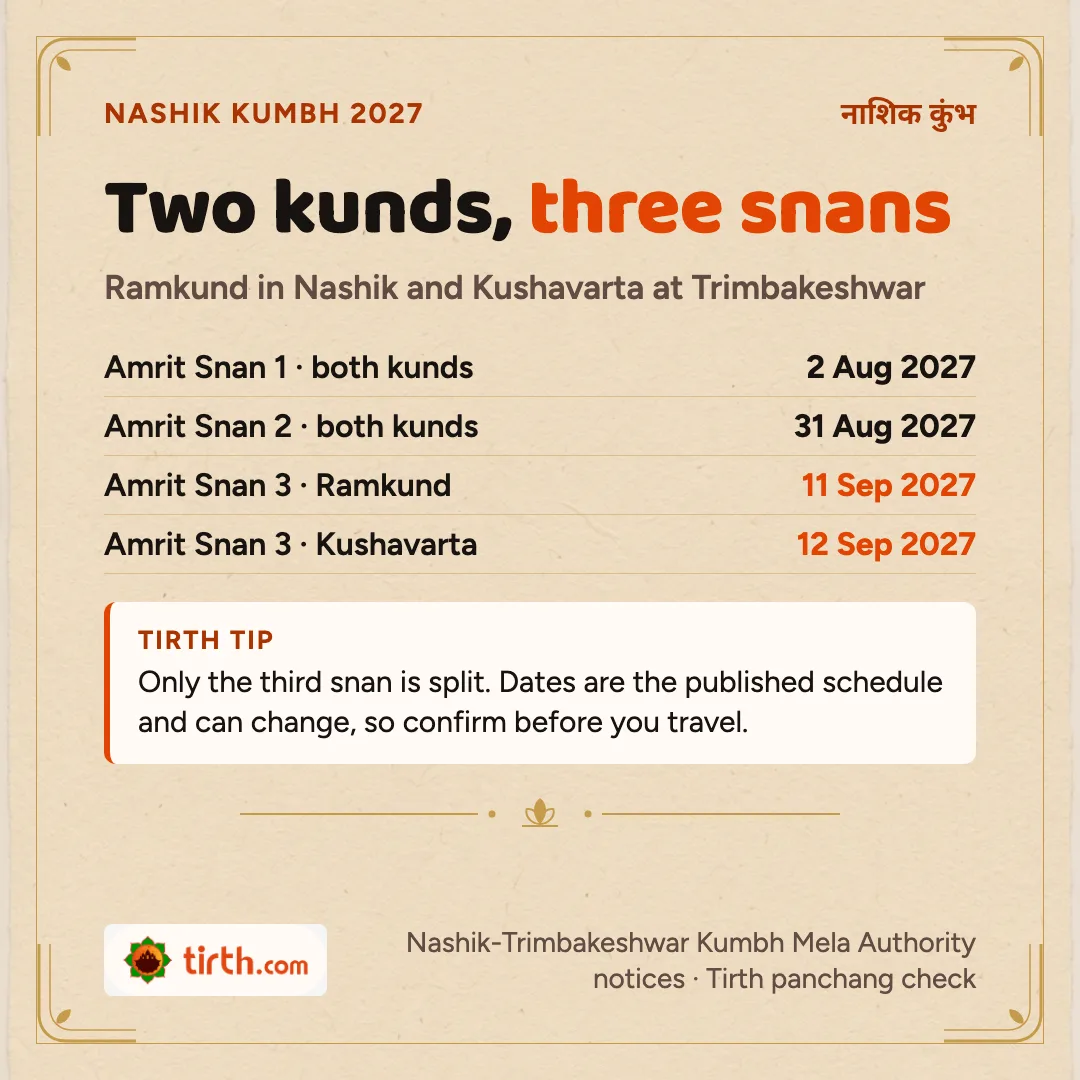
By the Tirth Panchang, each tithi in the table is running at sunrise at Nashik on its date, so the notified days and the panchang agree.
On the first two Amrit Snans you can bathe at either kund. The third is different. On that snan the kund and the day come as a pair. If you are taking your parents to Ramkund, the date is Saturday, 11 September 2027, and if it is Kushavarta, it is Sunday, 12 September 2027.
So choose the kund first. Book the stay in that town, and only then fix the dates. The two kunds are about 30 km apart, so plan them as separate days.
The official dates list on KumbhMela.info has the whole period (flag hoisting, Nagar Pradakshina, the snans etc.) as the notices give it. If you want Tirth to arrange the trip, start with the Nashik pilgrimage packages.
For the rest of the year’s plan, from the full list of days to getting there, go next to the Nashik Simhastha 2027 complete guide.
Frequently asked questions
Which akharas bathe where in Nashik?
By a long-standing arrangement made by the Peshwas, Vaishnava akharas bathe at Nashik and Shaiva (Sanyasi) and Udasin akharas at Trimbakeshwar. As of November 2026 we could find no published akhara-by-akhara plan for 2027.
How is the Nashik Kumbh different from Prayagraj and Haridwar?
Nashik’s Kumbh is held where one river, the Godavari, begins. It has two bathing towns, and its akharas bathe apart, while at Prayagraj, Haridwar and Ujjain they bathe together.
Is the Godavari the Ganga of the South?
Yes, the Nashik district government calls it Dakshin Ganga. The Brahma Purana’s Gautami Mahatmya tells how Rishi Gautama asked Bhagwan Shiv to bring Maa Ganga to Trimbak, and she came as the Gautami Godavari.
Where does the Godavari begin?
On the Brahmagiri hills at Trimbakeshwar, by the district government’s account. It is said to go underground there and come up again at Kushavarta.
Continue on Tirth
- Tirth, Tirth Panchang: Jupiter’s movements in and out of Leo, Simha Sankranti and the tithi for each bathing day, for Nashik.