
Vat Savitri Vrat Katha: Savitri’s Three-Day Vow and Yama’s Four Boons
Tirth editorial · 12 Feb 2026 · 7 min read
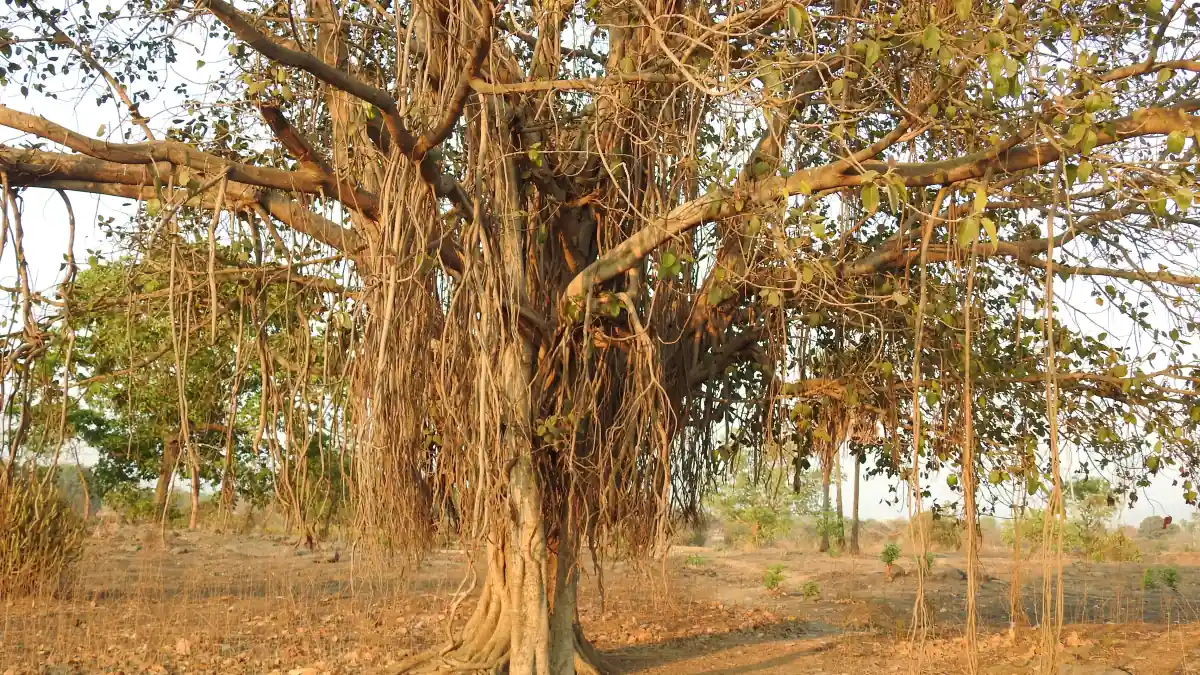
The Vat Savitri vrat katha is the story of Savitri, a princess who followed Yama, the god of death, and talked him into giving back her husband Satyavan. Married women keep the Vat Savitri vrat, worshipping a vat (banyan) tree, on Jyeshtha Amavasya in North India and as Vat Purnima in Maharashtra and Gujarat.
In the Mahabharata, Savitri does not fast for a single day. She keeps a three-day vow before the day her husband is meant to die, and Yama grants her four boons before he hands Satyavan’s life back.
Vat Savitri Vrat in 2027: Friday, 4 June. Amavasya tithi: 4:04 AM on the day to 1:09 AM the next morning. Sunrise in New Delhi: 5:23 AM.
Vat Purnima in 2027 (Maharashtra and Gujarat): Friday, 18 June.
Dates and timings are calculated for New Delhi using the traditional North Indian panchang. Timings change from city to city.
Checked on 27 Oct 2026. Vat Savitri timings for your city in the Tirth Spiritual Calendar
For the festival itself, how it is kept in different states and what the day means to families, see Vat Savitri customs and significance. This page stays with the story.
Where is the Savitri and Satyavan story in the Mahabharata?
It sits in the Vana Parva, the third book, which follows the Pandavas through their years in the forest. The section is called the Savitri Upakhyana, and also the Pativrata-mahatmya Parva (the chapters on the greatness of a devoted wife).
The setting matters. Jayadratha has just tried to carry off Draupadi, and Yudhishthira, shaken, asks the sage Markandeya whether any woman has ever shown devotion like hers.
Savitri’s story is the answer Markandeya gives.
Savitri, Satyavan and the four boons of Yama
Savitri was the daughter of Ashvapati, king of Madra. When it was time for her to marry, she chose Satyavan, the son of Dyumatsena, a king who had gone blind and lost his kingdom and now lived in exile in a forest hermitage.
Then the sage Narada spoke. Satyavan, he said, would die within a year.
Savitri married him anyway and went to live in the hermitage. As the year ran out she counted the days, and before the day Narada had named she took the Triratra vow (a fast kept through three days and three nights). Her father-in-law, Dyumatsena, grieved at how hard it was, yet he would not tell her to break it. On the fourth morning she made her offerings to the sacred fire and bowed to the elders of the hermitage.
On the fourth day Satyavan set out to cut wood. Savitri went with him.
In the forest he complained of a headache and lay down with his head in her lap, and that is when Yama came for him. Yama drew out Satyavan’s life and turned south. Savitri followed, and she kept following, speaking to him of dharma as she went, until Yama offered her a boon, anything except her husband’s life.
She asked for four things, one at a time, in this order.
- Sight and strength for her father-in-law, Dyumatsena.
- The return of his lost kingdom.
- A hundred sons for her own father, Ashvapati.
- A hundred sons for herself and Satyavan.
Yama granted the fourth. Which is where Savitri had him, because a hundred sons with Satyavan needed Satyavan alive, and when she pointed this out Yama gave her husband’s life back.
Read that last boon slowly when you tell the katha at home. I think it is the heart of the story. Savitri asks first for things Yama can give without breaking his own condition, and only once he has promised her sons by Satyavan does she ask for her husband’s life, which Yama can no longer refuse. There is no fight with Yama anywhere in the story.
After Yama gives Satyavan’s life back, the epic has him add a little more: four hundred years of life for Satyavan, and a line of sons who will be kings, and sons for Ashvapati as well. The four above are the ones Savitri asks for before that, in that order.
Why the banyan, when the epic does not name one?
Vat is the banyan, and the vrat takes its name from the tree. Yet in the English translation of the passage where Satyavan lies down with his head in Savitri’s lap, no banyan is named, and none appears elsewhere in the episode as that translation gives it.
The tree comes from the vrat as it is kept, and from local folklore, which links the banyan with Savitri’s victory over Yama. So a telling that seats Satyavan under a banyan is the custom speaking, not the Vana Parva. Or rather, it is the custom reading the tree back into the story.
Both are worth keeping. Just keep them apart.
How the Vat Savitri vrat is kept
The vrat itself is kept by married women, as the older descriptions have it. The tree is the centre of the day: they worship the banyan, wind a thread round its trunk and make offerings such as fruit, and a fast goes with all of it, for one day at the least in the older descriptions and three days for the very devout, after Savitri’s own vow. Beyond that, every family has its own order of steps.
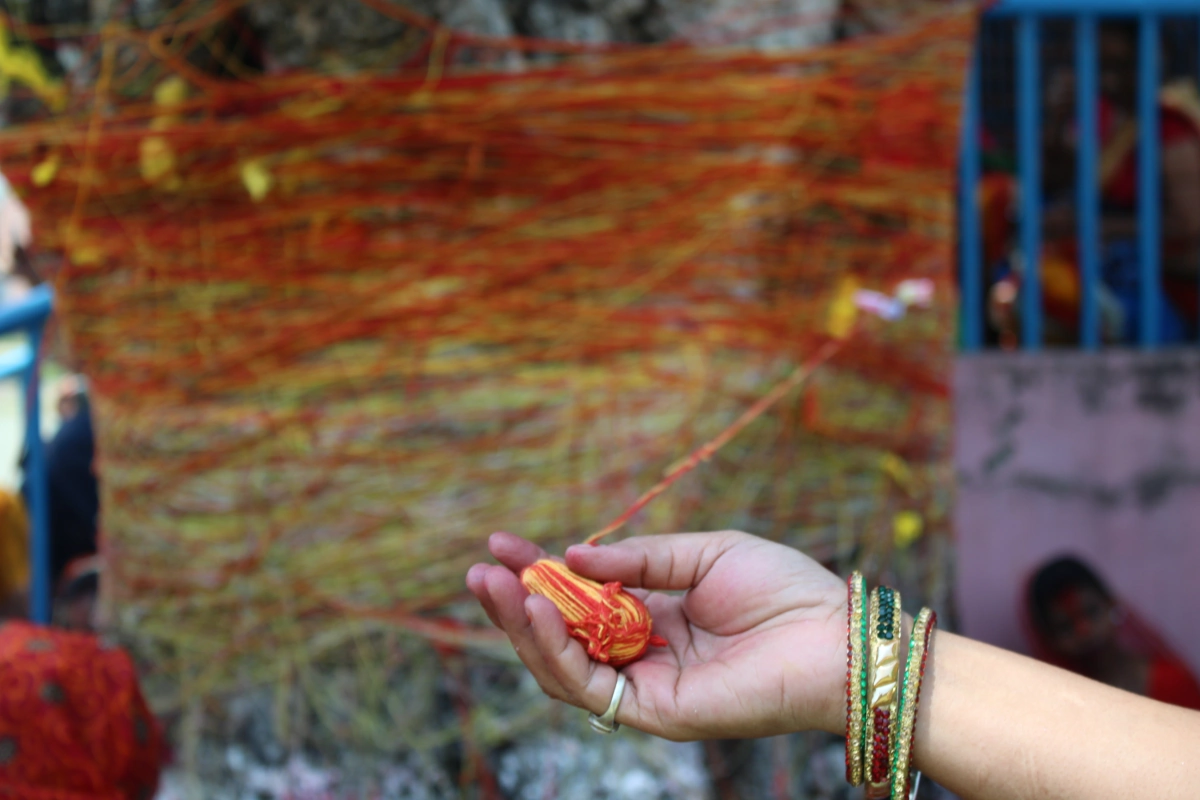
How long and how strict the fast is belongs to family custom, and no rule for it comes from the epic. If your family keeps a strict fast and you cannot, say so well before the day. Talk to them and to your family priest.
Where there is no banyan close by, ask the family priest what your household does instead. More on the customs of the day is in our Vat Savitri festival guide.
If you would like a priest to do the puja for your family, you can book a puja on Tirth.
Vat Savitri on Amavasya, Vat Purnima on the full moon
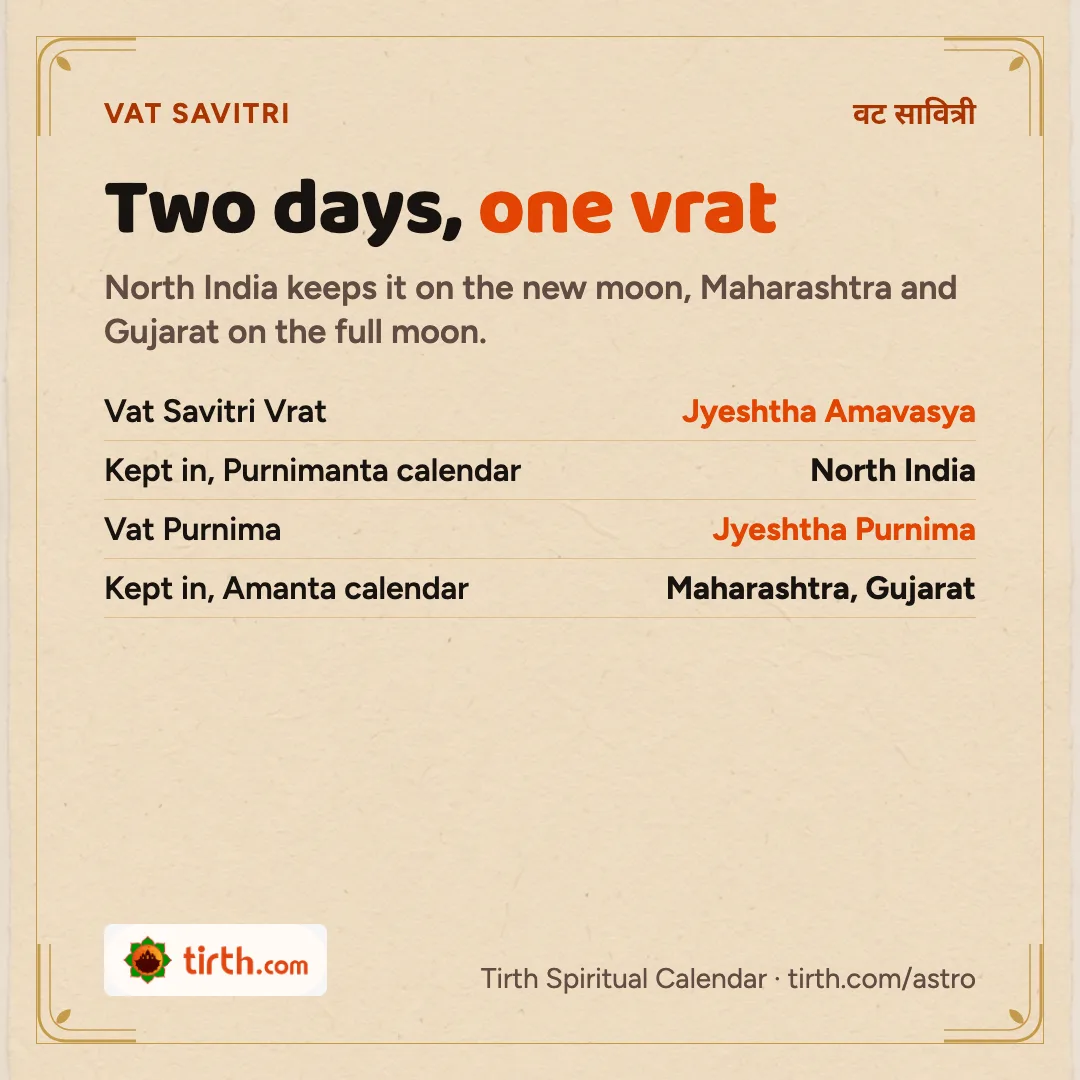
Two calendars, one month name. North India counts each lunar month as ending on Purnima (the Purnimanta reckoning), while Maharashtra and Gujarat count it as ending on Amavasya (the Amanta reckoning), so the same new moon that North India calls Jyeshtha Amavasya falls in Vaishakha for the west.
That is why the western observance waits about two weeks, for the full moon of Jyeshtha proper. Bihar, Jharkhand and Odisha also keep the new moon.
More vrat kathas on Tirth: the Hartalika Teej katha, the Jyeshtha Gauri vrat katha and the Karwa Chauth katha.
Frequently asked questions
What is the Vat Savitri katha?
It is the story of Savitri, daughter of King Ashvapati of Madra, who married Satyavan knowing from Narada that he would die within a year. When Yama came for him, she followed and won four boons, the last of which could not be granted without Satyavan alive, so Yama returned his life.
Where is the Savitri and Satyavan story in the Mahabharata?
In the Vana Parva, in the section called the Savitri Upakhyana or Pativrata-mahatmya Parva. Markandeya tells it to Yudhishthira in the forest.
How many boons did Savitri get from Yama?
Four, before Satyavan’s life is given back. Sight and strength for Dyumatsena, his lost kingdom, a hundred sons for Ashvapati, then a hundred sons for herself and Satyavan, after which Yama gave Satyavan’s life back. The epic then has him add four hundred years of life for Satyavan.
Why is the banyan tree worshipped on Vat Savitri?
Vat means banyan, and the vrat is kept at the tree. Local folklore links the banyan with Savitri’s victory over Yama, though the epic passage in translation does not name the tree.
Is Vat Savitri on Amavasya or Purnima?
Both, by region. North India, Bihar, Jharkhand and Odisha keep it on Jyeshtha Amavasya. Maharashtra and Gujarat keep Vat Purnima on Jyeshtha Purnima, about two weeks later, because they reckon the month from new moon to new moon.
Continue on Tirth
- Tirth Spiritual Calendar: festival days and tithi timings for your city.