
Parwati Chalisa: full Hindi text, English letters and meaning
Tirth editorial · 3 Jan 2026 · 12 min read
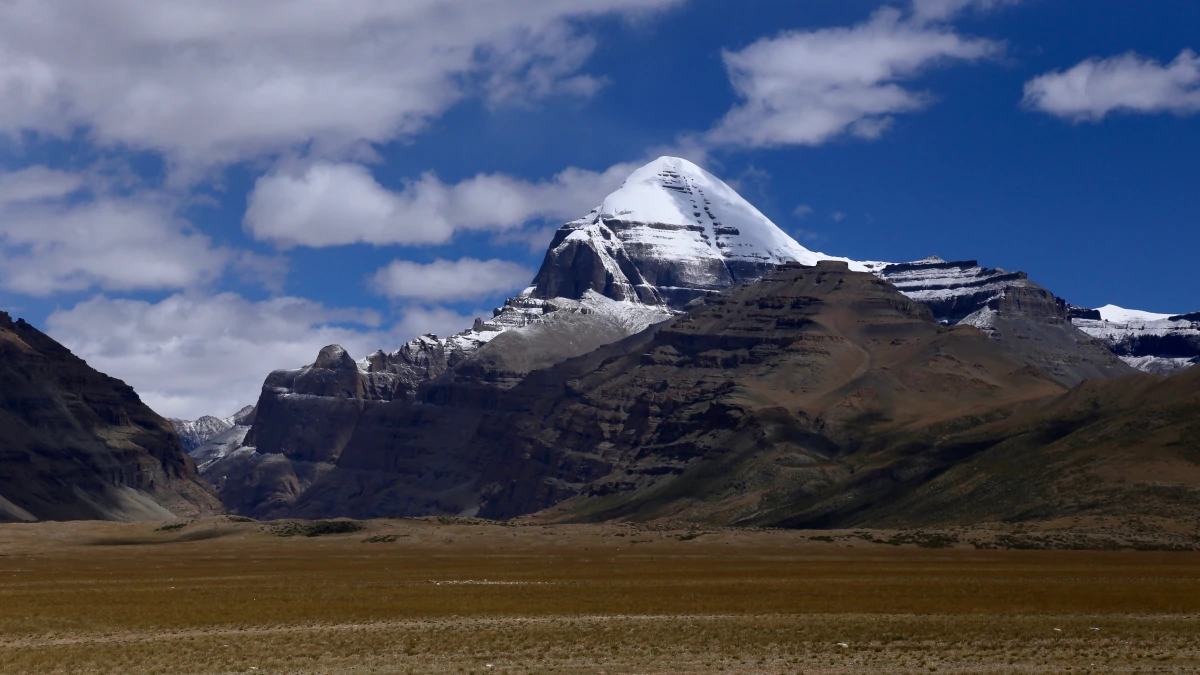
The Parwati Chalisa, also spelt Parvati Chalisa, is a Hindi prayer to Maa Parvati made of 40 chaupai couplets set between two dohas. It opens with “Jay giri tanaye”, victory to the daughter of the mountain. In chaupai 33 the chalisa says she would not eat even leaves and got the name Uma for it.
Every Hindi line on this page is the “Shri Parvati Chalisa” printed on pages 246 to 249 of 51 Chalisa Sangrah Artiyon Sahit (Randhir Prakashan, Haridwar, 2004), checked against the page images of that book on the Internet Archive. The book prints no author. Nor do we.
Parvati Chalisa in Hindi, as the 2004 book prints it
Read it aloud if you can, and slowly. In chaupai 7 the two halves end on शोभा (shobha) and लोभा (lobha), and the ear notices at once when the second word is clipped to लोभ, as it is in some copies.
जय गिरी तनये दक्षजे शंभु प्रिये गुणखानि। गणपति जननी पार्वती अम्बे! शक्ति! भवानि॥
ब्रह्मा भेद न तुम्हरो पावे, पंच बदन नित तुमको ध्यावे।
षड्मुख कहि न सकत यश तेरो, सहसबदन श्रम करत घनेरो।
तेऊ पार न पावत माता, स्थित रक्षा लय हित सजाता।
अधर प्रवाल सदृश अरुणारे, अति कमनीय नयन कजरारे।
ललित ललाट विलेपित केशर, कुंकुम अक्षत शोभा मनहर।
कनक बसन कंचुकी सजाए, कटि मेखला दिव्य लहराए।
कंठ मदार हार की शोभा, जाहि देखि सहजहि मन लोभा।
बालारुण अनन्त छबि धारी, आभूषण की शोभा प्यारी।
नाना रत्न जटित सिंहासन, तापर राजति हरि चतुरानन।
इन्द्रादिक परिवार पूजित, जग मृग नाग यक्ष रव कूजित।
गिर कैलास निवासिनी जय जय, कोटिक प्रभा विकासिन जय जय।
त्रिभुवन सकल कुटुम्ब तिहारी, अणु अणु महं तुम्हारी उजियारी।
हैं महेश प्राणेश! तुम्हारे, त्रिभुवन के जो नित रखवारे।
उनसो पति तुम प्राप्त कीन्ह जब, सुकृत पुरातन उदित भए तब।
बूढ़ा बैल सवारी जिनकी, महिमा का गावे कोउ तिनकी।
सदा श्मशान बिहारी शंकर, आभूषण है भुजंग भयंकर।
कण्ठ हलाहल को छबि छायी, नीलकण्ठ की पदवी पायी।
देव मगन के हित अस कीन्हों, विष लै आपु तिनहि अमि दीन्हों।
ताकी तुम पत्नी छवि धारिणि, दूरित विदारिणि मंगल कारिणि।
देखि परम सौन्दर्य तिहारो, त्रिभुवन चकित बनावन हारो।
भय भीता सो माता गंगा, लज्जा मय है सलिल तरंगा।
सौत समान शम्भु पहआयी, विष्णु पदाब्ज छोड़ि सो धायी।
तेहिकों कमल बदन मुरझायो, लखि सत्वर शिव शीश चढ़ायो।
नित्यानन्द करी बरदायिनी, अभय भक्त कर नित अनपायिनि।
अखिल पाप त्रयताप निकन्दिनि, माहेश्वरी हिमालय नन्दिनि।
काशी पुरी सदा मन भायी, सिद्ध पीठ तेहि आपु बनायी।
भगवती प्रतिदिन भिक्षा दात्री, कृपा प्रमोद सनेह विधात्री।
रिपुक्षय कारिणि जय जय अम्बे, वाचा सिद्ध करि अवलम्बे।
गौरी उमा शंकरी काली, अन्नपूर्णा जग प्रतिपाली।
सब जन की ईश्वरी भगवती, पतिप्राणा परमेश्वरी सती।
तुमने कठिन तपस्या कीनी, नारद सों जब शिक्षा लीनी।
अन्न न नीर न वायु अहारा, अस्थि मात्रतन भयउ तुम्हारा।
पत्र घास को खाद्य न भायउ, उमा नाम तब तुमने पायउ।
तप बिलोकि रिषि सात पधारे, लगे डिगावन डिगी न हारे।
तब तव जय जय जय उच्चारेउ, सप्तरिषी निज गेह सिधारेउ।
सुर विधि विष्णु पास तब आए, वर देने के वचन सुनाए।
मांगे उमा वर पति तुम तिनसों, चाहत जग त्रिभुवन निधि जिनसों।
एवमस्तु कहि ते दोऊ गए, सुफल मनोरथ तुमने लए।
करि विवाह शिव सों हे भामा, पुनः कहाई हर की बामा।
जो पढ़िहै जन यह चालीसा, धन जन सुख देइहै तेहि ईसा।
कूट चंद्रिका सुभग शिर जयति जयति सुख खानि। पार्वती निज भक्त हित रहहु सदा वरदानि॥
Where some online copies of the Parvati Chalisa slip
Copies of this chalisa found online part from the printed book in many small spellings, and in the nineteen places that matter most, listed below. Most are small (a long vowel for a short one, two words fused, a letter swapped), but a few change what the line says.
In chaupai 3 some copies have तेरो पार, which only echoes the तेरो that ends the first half of chaupai 2, where the print has तेऊ पार न पावत माता, even they cannot find your end, Mother, and in chaupai 22 some have सामान where the print has समान, like. Chaupai 30 can carry a garbled पतप्राणा for पतिप्राणा (she whose life is her husband). And in chaupai 35 the तब goes missing.
| Where | As printed (2004) | Online copy reads |
|---|---|---|
| Chaupai 1 | तुम्हरो | तुम्हरे |
| Chaupai 3 | तेऊ पार न पावत माता | तेरो पार न पावत माता |
| Chaupai 5 | ललाट, मनहर | लालट, मनोहर |
| Chaupai 7 | मन लोभा | मन लोभ |
| Chaupai 11 | कोटिक प्रभा विकासिन | कोटिकप्रभा विकासिनी |
| Chaupai 16 | श्मशान बिहारी | श्मशान विहरी |
| Chaupai 18 | कीन्हों, दीन्हों | किन्हों, दिन्हो |
| Chaupai 22 | सौत समान शम्भु | सौत सामान शम्भू |
| Chaupai 23 | तेहिकों, मुरझायो, लखि, चढ़ायो | तेहि कों, मुर्झायो, लखी, चढायो |
| Chaupai 24 | बरदायिनी, अनपायिनि | वरदायिनी, अनपायिनी |
| Chaupai 25 | त्रयताप निकन्दिनि | त्रय्ताप निकन्दनी |
| Chaupai 30 | पतिप्राणा | पतप्राणा |
| Chaupai 31 | कीनी, नारद सों | किणी, नारद सो |
| Chaupai 33 | खाद्य | खाद्या |
| Chaupai 34 | बिलोकि रिषि | बिलोकी ऋषि |
| Chaupai 35 | तब तव जय जय जय उच्चारेउ, सिधारेउ | तव तव जय जय जयउच्चारेउ, सिद्धारेउ |
| Chaupai 38 | कहि | कही |
| Chaupai 40 | धन जन सुख | धन जनसुख |
| Closing doha | जयति जयति सुख खानि | जयति सुख खानी |
We would rather you read a chalisa slowly from a correct copy than fluently from a broken one, because a slip read each and every day soon starts to sound like the text itself.
Parvati Chalisa in English letters
This is for whoever in the family follows Roman script more easily than Devanagari. The spelling is kept plain, with aa and ee for long vowels where the sound needs it and no other marks. Each line follows the Hindi word for word, Teu in chaupai 3 included.
| Line | In English letters |
|---|---|
| Opening doha | Jay giri tanaye dakshaje Shambhu priye gunkhaani. Ganpati janani Parvati Ambe! Shakti! Bhavaani. |
| Chaupai 1 | Brahma bhed na tumharo paave, panch badan nit tumko dhyaave. |
| Chaupai 2 | Shadmukh kahi na sakat yash tero, sahasbadan shram karat ghanero. |
| Chaupai 3 | Teu paar na paavat maata, sthit raksha lay hit sajaata. |
| Chaupai 4 | Adhar praval sadrish arunaare, ati kamaneey nayan kajraare. |
| Chaupai 5 | Lalit lalaat vilepit keshar, kunkum akshat shobha manhar. |
| Chaupai 6 | Kanak basan kanchuki sajaae, kati mekhla divya lahraae. |
| Chaupai 7 | Kanth madaar haar ki shobha, jaahi dekhi sahajahi man lobha. |
| Chaupai 8 | Baalaarun anant chhabi dhaari, aabhushan ki shobha pyaari. |
| Chaupai 9 | Naana ratna jatit sinhaasan, taapar raajati Hari Chaturaanan. |
| Chaupai 10 | Indraadik parivaar poojit, jag mrig naag yaksh rav koojit. |
| Chaupai 11 | Gir Kailaas nivaasini jay jay, kotik prabha vikaasin jay jay. |
| Chaupai 12 | Tribhuvan sakal kutumb tihaari, anu anu mahan tumhaari ujiyaari. |
| Chaupai 13 | Hain Mahesh praanesh! tumhaare, tribhuvan ke jo nit rakhvaare. |
| Chaupai 14 | Unso pati tum praapt keenh jab, sukrit puraatan udit bhae tab. |
| Chaupai 15 | Boodha bail savaari jinki, mahima ka gaave kou tinki. |
| Chaupai 16 | Sada shmashaan bihaari Shankar, aabhushan hai bhujang bhayankar. |
| Chaupai 17 | Kanth halaahal ko chhabi chhaayi, Neelkanth ki padvi paayi. |
| Chaupai 18 | Dev magan ke hit as keenhon, vish lai aapu tinhi ami deenhon. |
| Chaupai 19 | Taaki tum patni chhavi dhaarini, doorit vidaarini mangal kaarini. |
| Chaupai 20 | Dekhi param saundarya tihaaro, tribhuvan chakit banaavan haaro. |
| Chaupai 21 | Bhay bheeta so maata Ganga, lajja may hai salil taranga. |
| Chaupai 22 | Saut samaan Shambhu pahaayi, Vishnu padaabj chhodi so dhaayi. |
| Chaupai 23 | Tehikon kamal badan murjhaayo, lakhi satvar Shiv sheesh chadhaayo. |
| Chaupai 24 | Nityaanand kari bardaayini, abhay bhakt kar nit anpaayini. |
| Chaupai 25 | Akhil paap traytaap nikandini, Maaheshvari Himaalay nandini. |
| Chaupai 26 | Kaashi puri sada man bhaayi, siddh peeth tehi aapu banaayi. |
| Chaupai 27 | Bhagvati pratidin bhiksha daatri, kripa pramod saneh vidhaatri. |
| Chaupai 28 | Ripukshay kaarini jay jay Ambe, vaacha siddh kari avalambe. |
| Chaupai 29 | Gauri Uma Shankari Kaali, Annapurna jag pratipaali. |
| Chaupai 30 | Sab jan ki Ishvari Bhagvati, patipraana Parmeshvari Sati. |
| Chaupai 31 | Tumne kathin tapasya keeni, Naarad son jab shiksha leeni. |
| Chaupai 32 | Ann na neer na vaayu ahaara, asthi maatratan bhayau tumhaara. |
| Chaupai 33 | Patra ghaas ko khaadya na bhaayau, Uma naam tab tumne paayau. |
| Chaupai 34 | Tap biloki rishi saat padhaare, lage digaavan digi na haare. |
| Chaupai 35 | Tab tav jay jay jay uchchaareu, saptarishi nij geh sidhaareu. |
| Chaupai 36 | Sur vidhi Vishnu paas tab aae, var dene ke vachan sunaae. |
| Chaupai 37 | Maange Uma var pati tum tinson, chaahat jag tribhuvan nidhi jinson. |
| Chaupai 38 | Evamastu kahi te dou gae, suphal manorath tumne lae. |
| Chaupai 39 | Kari vivaah Shiv son he bhaama, punah kahaai Har ki baama. |
| Chaupai 40 | Jo padhihai jan yah chaalisa, dhan jan sukh deihai tehi eesa. |
| Closing doha | Koot chandrika subhag shir jayati jayati sukh khaani. Parvati nij bhakt hit rahahu sada vardaani. |
What the 40 chaupai say, from Kailash to the wedding
The chalisa moves in clear blocks, and it is easier to follow that way than line by line. Her glory comes first. Then her form and her court, then Shiva and Ganga, her many names, and last the tapasya and the marriage. The renderings below are ours, kept close to the Hindi.
| Lines | What they say (Tirth’s rendering) |
|---|---|
| Opening doha | Victory to the daughter of the mountain (giri tanaye), daughter of Daksha, beloved of Shambhu, mother of Ganapati. Parvati, Ambe, Shakti, Bhavani. |
| Chaupai 1 to 3 | Not even Brahma knows your secret (bhed), and the five-faced one meditates on you every day. The six-faced one cannot tell your glory, and the thousand-mouthed one labours at it. Even they cannot find your end, Mother. |
| Chaupai 4 to 8 | Her lips are like coral, her very lovely eyes are dark (kajraare), and her forehead is marked with keshar (saffron) and kumkum. She wears golden clothes and a bodice, a girdle at the waist and a madar garland at the throat, with the radiance of the rising sun. |
| Chaupai 9 to 11 | Hari and Chaturanan (Vishnu and Brahma) grace her jewelled throne. Indra and the others worship her, and the world’s creatures, snakes and yakshas sing her praise. Victory to her who dwells on Kailash. |
| Chaupai 12 to 19 | The three worlds are her family. Mahesh, guardian of the three worlds, is the lord of her life (praanesh). He rides an old bull, roams the cremation ground and wears snakes, and he took the title Neelkanth by holding the halahal poison so the gods could have amrit. As his wife she tears away evil and brings what is good. |
| Chaupai 20 to 23 | Ganga, afraid and rippling with shame, is pictured as Shiva’s co-wife, who left Vishnu’s feet. When her lotus face wilted, Shiva set her on his head. |
| Chaupai 24 to 30 | She gives boons and fearlessness, destroys sin and the three sufferings, and is Maheshwari, the daughter of Himalaya. Kashi pleased her mind and she made it a siddh peeth. She gives alms every day, and she is Gauri, Uma, Shankari, Kali and Annapurna, protector of the world, devoted to her husband. |
| Chaupai 31 to 35 | She learned from Narad and did hard tapasya, taking no food, water or air until she was only bone. She would not eat even leaves, and so she got the name Uma. The seven sages came and tried to shake her, could not move her, hailed her three times and went home. |
| Chaupai 36 to 39 | The gods, with Brahma (vidhi) and Vishnu, came and offered a boon. Uma asked them for a husband. They said so be it and left, and after her wedding to Shiva she was called the consort of Har. |
| Chaupai 40 and closing doha | Whoever reads this chalisa, the Lord gives him wealth, family and happiness. Parvati, crowned with the moon-bright kut, remain always a giver of boons to your devotees. |
A handful of words are worth knowing on their own, and for these the source is Platts’ Dictionary of Urdu, Classical Hindi and English. Kanchuki in chaupai 6 is a jacket or bodice, mekhla a girdle. Kajraare, said of eyes, means black. Bhujang (chaupai 16) is a snake, commonly the cobra, halaahal (chaupai 17) a species of deadly poison, and shmashaan a burning-ground, the place where the dead are burnt or buried.
Sukrit, the merit that rises when she wins Shiva in chaupai 14, is a good or virtuous act.
Vidaarini in chaupai 19 is she who tears away, from vidaarna, to tear or rend, and taap in chaupai 25 is affliction, pain or distress. Satvar in chaupai 23 means quickly. Pramod (chaupai 27) is great joy, bhiksha is alms, and in chaupai 22 saut is a co-wife.
Which leaves pahaayi, in that same chaupai 22. No dictionary we checked has it, so it stays unglossed here (the sense of the line around it is clear enough without it). Chaupai 29 also names her Annapurna, and the Annapurna aarti is a separate prayer to her in that form.
How Parvati came to be called Uma
Nine chaupai, 31 to 39, tell the story of her tapasya and her marriage.
The chalisa says she learned from Narad and then did hard tapasya. She went without food, water and even air until her body was bone alone (asthi maatratan, chaupai 32). Leaves and grass she would not eat either. Which is how, the text says, she got the name Uma.
The seven sages came next, having seen her tapas (biloki, from bilokna, to behold), and tried to shake her resolve. She did not move. So they hailed her with jay jay jay and went home, or rather they sidhaare, the word Platts gives as to set out or depart, a word of affection.
After that the gods came with Brahma and Vishnu to offer her a boon, Uma asked them for a husband, they said evamastu, so be it, and left, and after her wedding to Shiva she was called Har ki baama, the consort of Har.
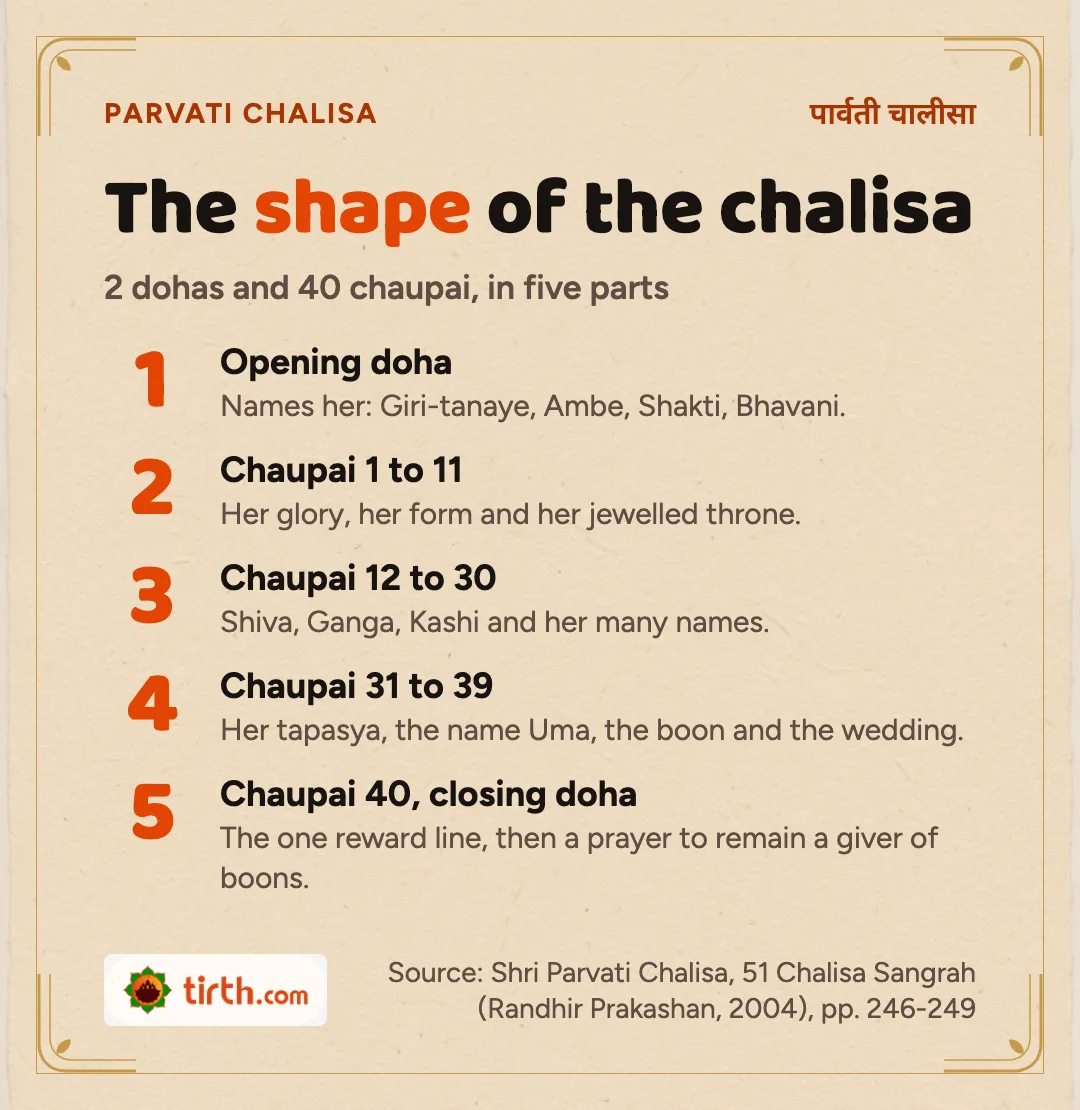
The one reward chaupai 40 names
Only one line in it names a reward.
Chaupai 40 says that whoever reads this chalisa is given dhan, jan and sukh (wealth, family and happiness) by the Lord, and the closing doha asks Parvati to remain a giver of boons to her devotees.
When to read the Parvati Chalisa
The printed text sets neither a day nor an hour for it.
So read it when you sit for her puja or as part of your daily prayer (with the Hindi open in front of you the first few times, even if you think you know it by heart). The Hartalika Teej katha is a separate text, and the Tirth festival calendar has festival dates for your city. To close with an aarti there is the Parvati aarti.
For Shiva himself there is the Shiv Chalisa, and the Durga Chalisa and the Jaya Parvati vrat katha sit alongside this one.
Frequently asked questions
Who wrote the Parvati Chalisa?
No author is named. The 2004 Randhir Prakashan printing gives the text without one, so this page credits nobody rather than guess.
How many verses are in the Parvati Chalisa?
It has 40 chaupai couplets, eighty half-lines in all, with one doha before them and one after. Count couplets, not verses, if you are checking another copy against this one.
What does the Parvati Chalisa say about her tapasya?
Chaupai 31 to 35 say the tapasya she learned from Narad earned her the name Uma, and that even the seven sages could not move her.
What benefit does the Parvati Chalisa name?
Wealth, family and happiness (dhan, jan, sukh), which chaupai 40 says the Lord gives whoever reads it.
Is there a fixed day or time to read it?
The printed chalisa names none. It speaks only of whoever reads it, in chaupai 40.
What is the Parvati Chalisa in English letters?
The same chalisa, in Roman script. The table on this page follows the printed Hindi word for word, line by line, so you can read along with someone reading from a Hindi book.