
Karwa Chauth vrat: sargi, puja vidhi, the katha and the moon
Tirth editorial · 7 Feb 2026 · 10 min read
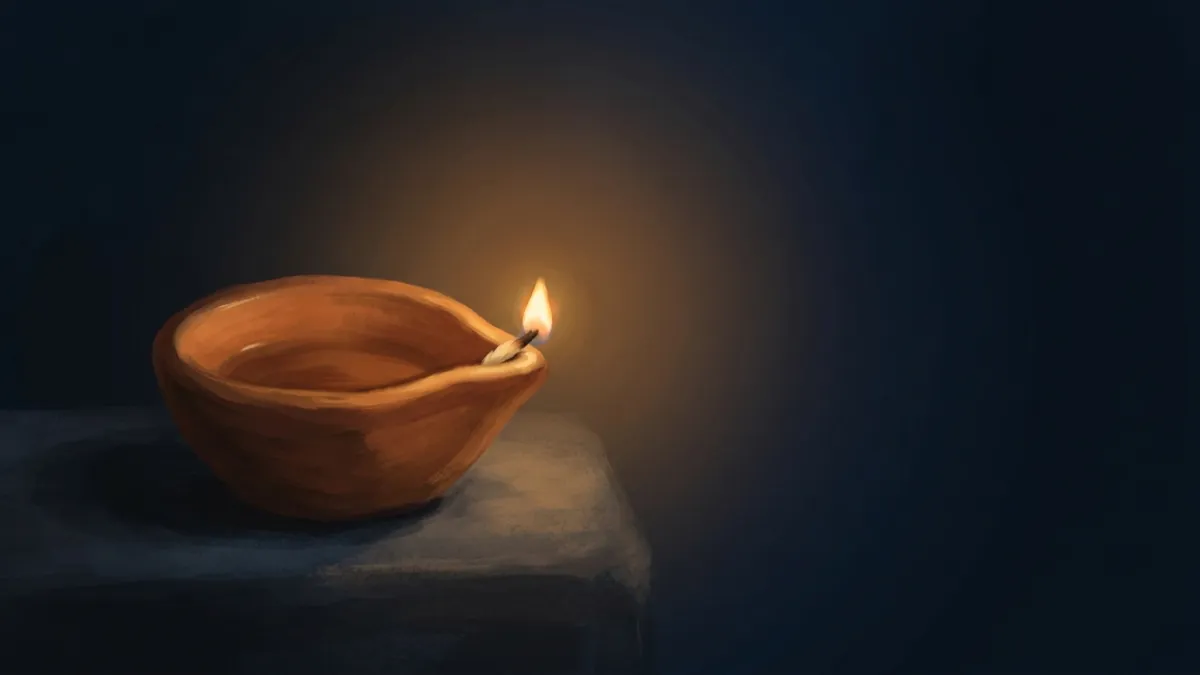
Karwa Chauth is the day a married woman goes without food or water from sunrise until she has seen the Moon, for her husband’s long life. In a Punjabi home it starts in the dark, when the mother-in-law hands her daughter-in-law the sargi, and that one meal has to last her through a nirjala fast (a fast without even water) until moonrise and the water offering.
Its other name is Karaka Chaturthi. The day is the Krishna Chaturthi of Kartika, the fourth lunar day of the waning fortnight, and in between the sargi and the Moon there is an evening puja to Maa Parvati as Gaura, with the katha told in a group. It ends when the husband gives her the first sip of water.
Karwa Chauth in 2026: Thursday, 29 October. Chaturthi tithi: 1:06 AM to 10:09 PM. Moonrise in New Delhi: 8:16 PM. The day is the same in Mumbai, Kolkata, Chennai and Bengaluru.
Checked on 27 Oct 2026. Karwa Chauth timings for your city in the Tirth Spiritual Calendar.
Dates and timings are calculated for New Delhi using the traditional North Indian panchang. Timings change from city to city, sometimes by more than an hour for moonrise; see the Tirth Spiritual Calendar for your location.
Karwa, chauth and the name Karaka Chaturthi
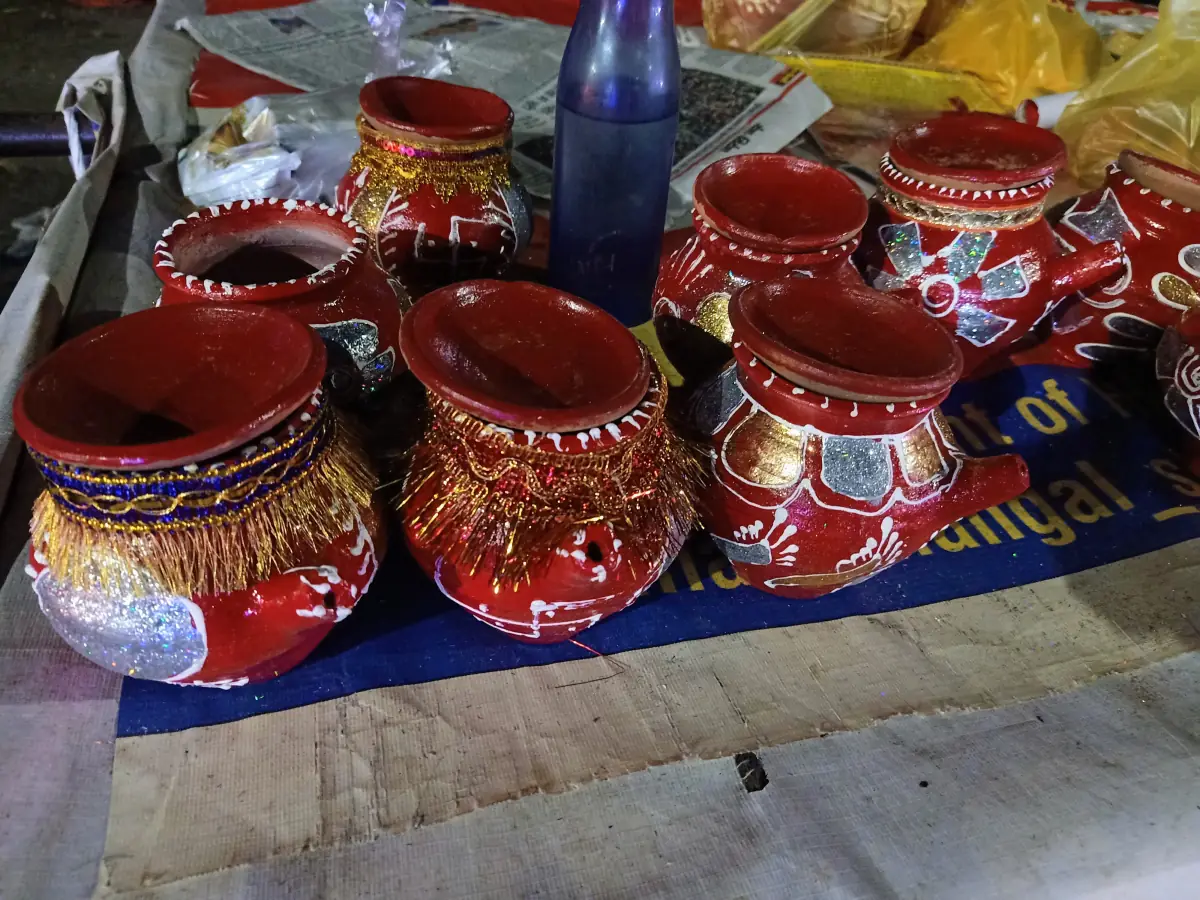
A karwa is a spouted earthen pot (spelt karva or karak too). Chauth means the fourth, that is, the fourth lunar day. The pot is the vessel for the water offering to the Moon. It is also given away as dan. In the Nirnaya Sindhu, the Dharma Sindhu and the Vratraj the day goes by Karaka Chaturthi. If your family’s printed panchang shows Karaka Chaturthi in Kartika, do not go hunting for a second fast, because it is this one.
Why does the date of Karwa Chauth move every year?
Karwa Chauth falls on the day the Krishna Chaturthi is still running when the Moon comes up, a rule known as chandrodaya-vyapini (present at moonrise), and the Dharma Sindhu lays down the same moonrise rule for Sankata (Sankashti) Chaturthi.
That moonrise test is why the Gregorian date shifts every year, and it explains how a Chaturthi that only begins after midnight can still take the day, so long as it is running at moonrise.
Ganesha’s monthly fast lands here too. The same waning Chaturthi is a Sankashti Chaturthi, and this one is called Vakratunda Sankashti, so anyone who keeps both Sankashti Chaturthi and Karwa Chauth keeps them on the same day.
The same day carries two month names. In North India’s Purnimanta calendar it is the Krishna Chaturthi of Kartika, while the Amanta calendar of Gujarat, Maharashtra and South India calls it the Krishna Chaturthi of Ashwin. Only the month name differs; the day is the same.
Published panchangs disagree by about 5 minutes, because some take the moment the Moon’s upper edge shows on the horizon, with atmospheric refraction counted, while others wait for the centre of the disc to reach it. That is nothing next to the gap between cities, which runs to over an hour across India. So go by the moonrise for your own city. We would much rather you waited for your own sky than broke the fast at a time forwarded from somewhere else. Your own city’s moonrise is listed in the Tirth Spiritual Calendar, which works it out for any town.
The Veeravati story, and who brings her husband back
The katha most families know is Veeravati’s. Seven brothers, and she their only sister. They made a false moon for her, she broke her fast at it, and she got her husband back only through renewed devotion.
In one popular telling it is Indrani who advises her. Another has the gods restore her husband after a year of prayer, while Tirth’s own retelling gives the guiding role to Maa Parvati and brings Yama in as well.
Neither of these tellings names a Purana for the story.
The story of Savitri and Satyavan is tied to the day as well, and if you want the whole katha told scene by scene, read the full Karwa Chauth katha.
Sargi before sunrise, and the plate in Punjab and Uttar Pradesh
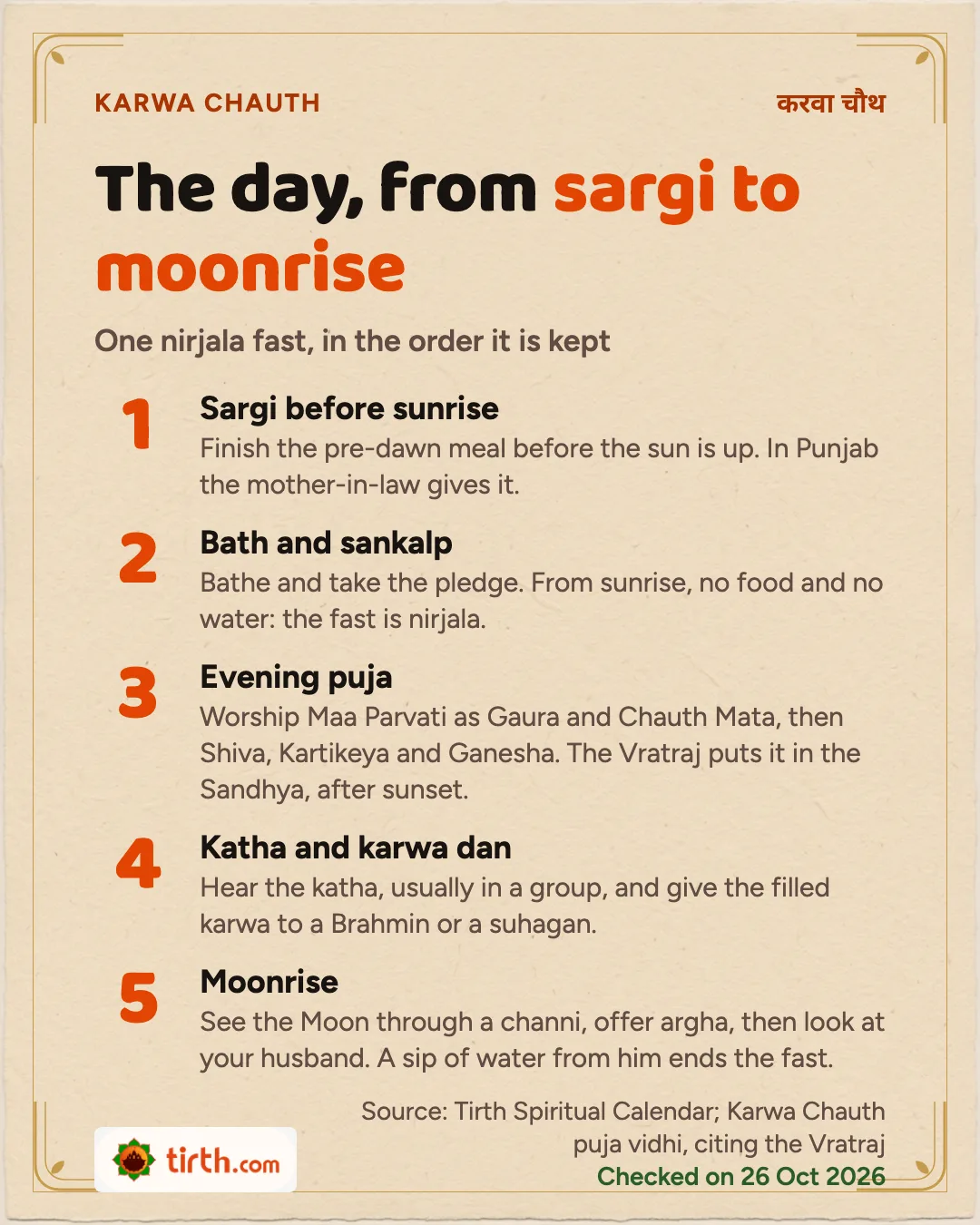
Sargi is the meal you eat before the sun is up. Finish it before sunrise, because that is when the nirjala fast begins (the Tirth Spiritual Calendar has sunrise for your city).
The plate itself depends on where the family comes from. In Punjab it comes from the mother-in-law, with fresh fruit, dry fruit, sweets, chapatis and vegetables. An Uttar Pradesh sargi has feni (vermicelli) in sweet milk, sweets and savouries, coconut, dry fruit and fara, and alongside it the suhaag items that mark a married woman, such as bangles and sindoor.
Punjab has one more custom, and it happens the night before, when the woman’s mother sends baya to her daughter’s home. Clothes, coconut, sweets, fruits and sindoor go in it, with gifts for the mother-in-law. All of it, both sargis and the baya, is kept as regional practice.
Karwa Chauth puja vidhi at home
The Vratraj would have the puja in the Sandhya period after sunset. Families do not always keep to that hour. Punjabi homes gather in the afternoon and Uttar Pradesh begins a little before moonrise, and the order of the steps below is the usual vidhi.
- In the morning, bathe and take the sankalp (the pledge that names the vrat and why you keep it), resolving to go without food or water until you have seen the Moon.
- For the evening, dress in solah shringar, the sixteen adornments, mehndi among them.
- Put up the image of Gaura and Chauth Mata, either drawn on the wall or as a printed Karwa Chauth puja calendar.
- Begin with Maa Parvati as Gaura and Chauth Mata, then worship Lord Shiva, Lord Kartikeya and Lord Ganesha. If you want to sing to her, the words are in the Parvati Mata aarti.
- Listen to the Karwa Chauth katha, which is the mahatmya of the vrat. Most often a group hears it together, and in Punjab an elderly woman is the one who tells it.
- Give the karwa away as dan (charity) to a Brahmin or a suhagan, a married woman, after filling it with water or milk and dropping coins or precious stones inside.
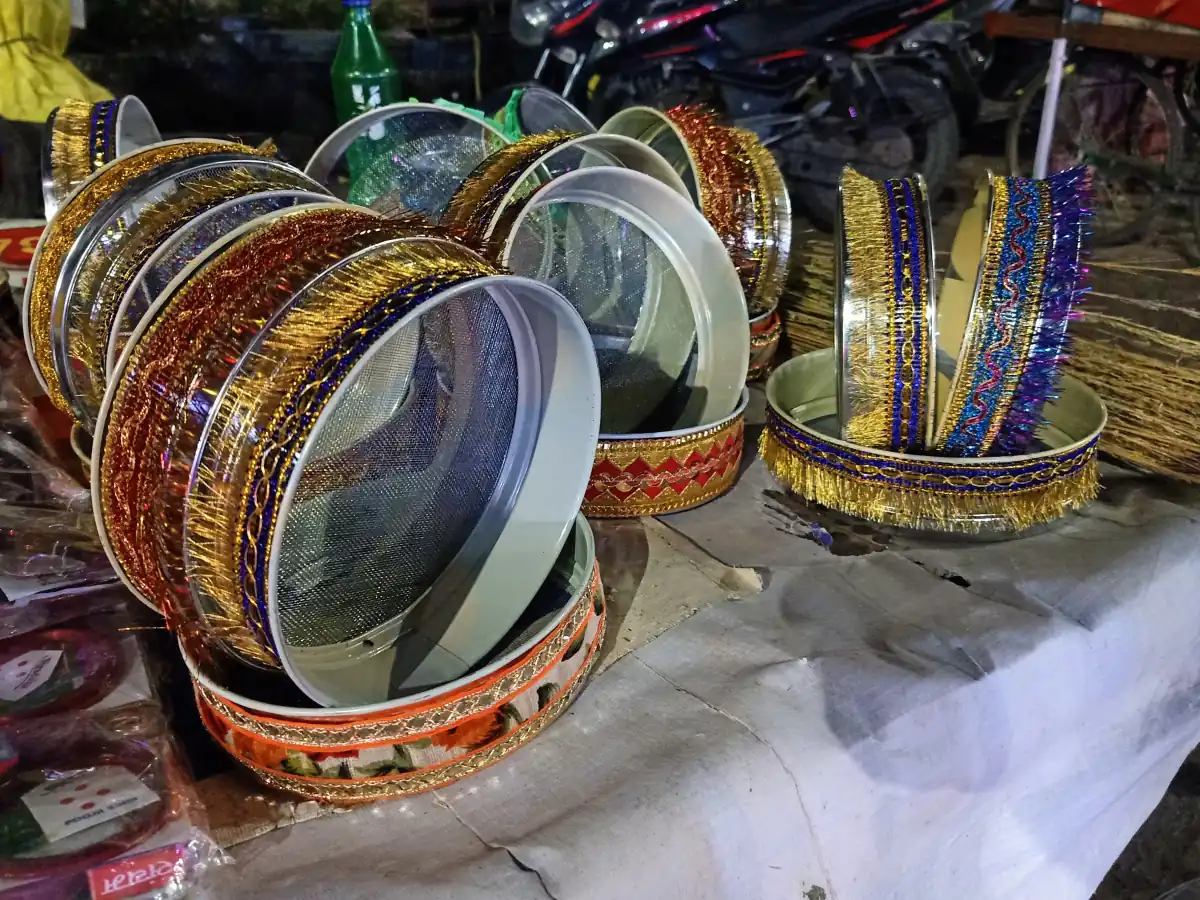
- When the Moon rises, worship Chandra Dev. Look at him through a channi (sieve) or a thin cloth, offer argha (water offered to him), and only then look at your husband. The Chandra Dev aarti has the words if you would like to sing to the Moon.
- Your husband gives you the first sip of water or kachi lassi (milk mixed with water) and a sweet, and with that the fast is over.
If there is no older woman at home to show you, the printed puja calendar from step 3 can stand in for the drawn image, and the katha can be heard with neighbours or friends who are fasting too.
Karwa Chauth puja samagri list
| Item | What it is for |
|---|---|
| Karwa (karak), the spouted earthen pot | Filled and given as dan |
| Water or milk | To fill the karwa |
| Coins or precious stones | Placed inside the karwa |
| Image of Gaura and Chauth Mata | Drawn on the wall, or a printed Karwa Chauth puja calendar |
| Thali with a diya, coconut, fruits, dry fruits, sweets or sweet mathri, and a glass of kachi lassi or water | The evening puja and the Moon offering |
| A cloth to cover the thali | Covers the thali (in Punjab the covered thalis are passed round the circle) |
| Channi (sieve) | Looking at the Moon |
| Rice paste | Drawing the Moon’s face, in some places in Uttar Pradesh |
| Suhaag items | Part of the puja, and gifts with the sargi in Uttar Pradesh |
Every item in the table is one that the usual vidhi names.
How the evening runs in Punjab and in Uttar Pradesh
In Punjab the women gather in the afternoon around a murti of Gaura Maa, and an elderly woman tells the katha while the covered thalis go round the circle seven times to a traditional song. Families call it thali batana. Uttar Pradesh starts later. Thalis or karwas are exchanged a little before moonrise and prayers go to Maa Parvati, and in some places women draw the Moon’s face in rice paste and offer water through the karwa seven times.
Both descriptions are regional practice, so take them as that, which your home may or may not follow. If you have married into a family from the other state, the evening will probably run to a different clock (an afternoon circle in one, a gathering close to moonrise in the other).
Karwa Chauth sits between Dussehra (Ashwin Shukla Dashami) and Diwali, a few days after Sharad Purnima, the full moon of Ashwin (see the Sharad Purnima katha). Four tithis after Karwa Chauth comes Ahoi Ashtami, on Kartika Krishna Ashtami (see the Ahoi Ashtami katha). Diwali and its Lakshmi Puja follow on Kartika Krishna Amavasya; see the Diwali guide.
Karwa Chauth is mostly a North Indian fast, kept in Punjab, Haryana, Himachal Pradesh, Uttar Pradesh, Rajasthan, Madhya Pradesh and Delhi NCR. Many count Atla Tadde, kept in Andhra Pradesh and Telangana, as a similar festival.
What are the rules of the Karwa Chauth fast?
- Have the sargi finished before the sun is up.
- From sunrise on, take no food and no water at all, because the fast is nirjala.
- The fast lasts until you have seen the Moon and offered argha. A clock time is only there to tell you when to start looking.
- If you follow the Vratraj, do the puja in the Sandhya period after sunset. Otherwise go with the hour at which your family’s circle meets.
- Give the karwa as dan, to a Brahmin or a suhagan.
Married women keep it for their husbands. Unmarried women do too (in the hope of the husband they wish for), and in some homes the husband now keeps the fast alongside his wife.
Frequently asked questions
What does Karwa Chauth mean?
Karwa is the earthen pot with a spout that the puja uses, and chauth means fourth, for the fourth lunar day of the waning fortnight. The Nirnaya Sindhu, the Dharma Sindhu and the Vratraj name the day Karaka Chaturthi.
What is sargi and when should it be eaten?
It is the meal eaten before sunrise on Karwa Chauth, finished before the nirjala fast starts. In Punjab the mother-in-law gives it, and an Uttar Pradesh sargi has feni in sweet milk, dry fruit and sweets.
Which gods are worshipped on Karwa Chauth?
Maa Parvati comes first, as Gaura and Chauth Mata, followed by Lord Shiva, Lord Kartikeya and Lord Ganesha. When the Moon rises, Chandra Dev is worshipped and given argha.
Can unmarried girls keep the Karwa Chauth fast?
Yes, they can. Many families have unmarried women keeping it in the hope of the husband they wish for, and some husbands fast as well.
Is Karwa Chauth on the same day as Sankashti Chaturthi?
Yes. The Krishna Chaturthi of Karwa Chauth is also a Sankashti Chaturthi, named Vakratunda Sankashti, and the Chaturthi present at moonrise decides both.
Why do panchangs show different moonrise times?
They time different moments. Some take the Moon’s upper edge appearing, with atmospheric refraction counted, and some take the centre of the disc reaching the horizon, which puts them about 5 minutes apart. The city you are in matters much more, since moonrise varies by over an hour across India.