
Govardhan Puja: the story of Govardhan Hill, Annakut and the puja at home
Tirth editorial · 10 Feb 2026 · 7 min read
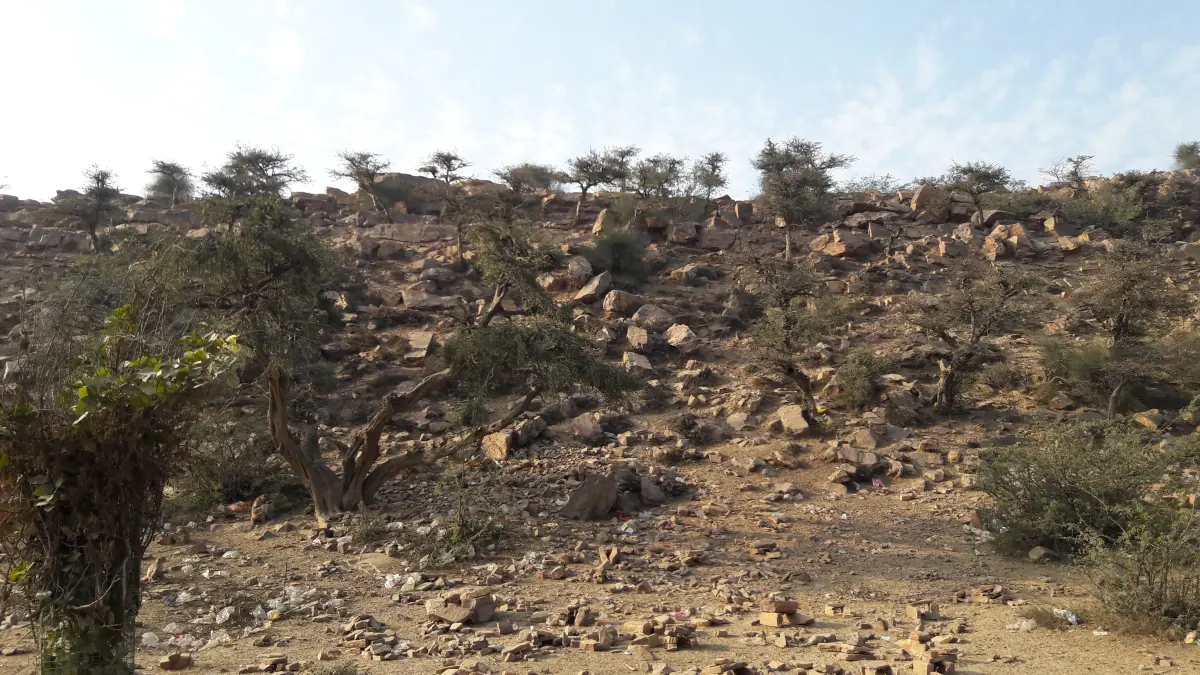
Govardhan Puja falls on Kartika Shukla Pratipada and remembers Shri Krishna lifting Govardhan Hill to shelter the cowherds of Braj. Its other name, Annakut, means a heap of food. Families shape a Govardhan from cow dung, offer it cooked dishes and worship their cows.
Govardhan Puja in 2026: Tuesday, 10 November. Kartika Shukla Pratipada: 12:30 PM on Monday, 9 November to 1:59 PM on Tuesday, 10 November (New Delhi). Pratipada is present at sunrise only on 10 November, so in 2026 there is a one-day gap between Diwali and Govardhan Puja.
Checked on 25 Oct 2026. Timings for your city in the Tirth Spiritual Calendar
Dates and timings here are for New Delhi, taken from the Tirth Spiritual Calendar. Timings change from city to city; see the Tirth Spiritual Calendar for your location.
The Govardhan Puja story, as the Bhagavata tells it
It begins with a sacrifice to Indra. The Bhagavata Purana tells the whole episode in Skandha 10, over four adhyayas (chapters 24 to 27), and it opens in Braj with Nanda and the other cowherds getting everything ready for that sacrifice. Nanda gives his young son the reason: Indra controls the rain (SB 10.24.1 and 10.24.8 to 10).
Krishna argues against it with his father, saying that a person gets results from their own karma and nature and not from Indra, so a community of cowherds living in the forest and the hills ought to worship what actually keeps them going, which for them means the cows, the brahmanas and Govardhan Hill itself (SB 10.24.13 to 18 and 10.24.24 to 25).
Where the first Annakut comes from
The stores gathered for Indra are not to be thrown out, Krishna says. Cook them instead. Everything collected goes into the pots, and out come sweet rice, vegetable soups, baked and fried cakes and milk preparations, which are offered to the hill while the brahmanas are fed (SB 10.24.26 to 28).
The cowherds go along with it. Once the hill has its offering, everyone circles Govardhan with their cows, bulls and calves (SB 10.24.29 and 10.24.32 to 33). Krishna then takes on a huge form, declares that he is Govardhan and eats what has been offered, while in his everyday cowherd form he stands among the others and bows to the hill with them (SB 10.24.35 to 36).
Seven days under the hill
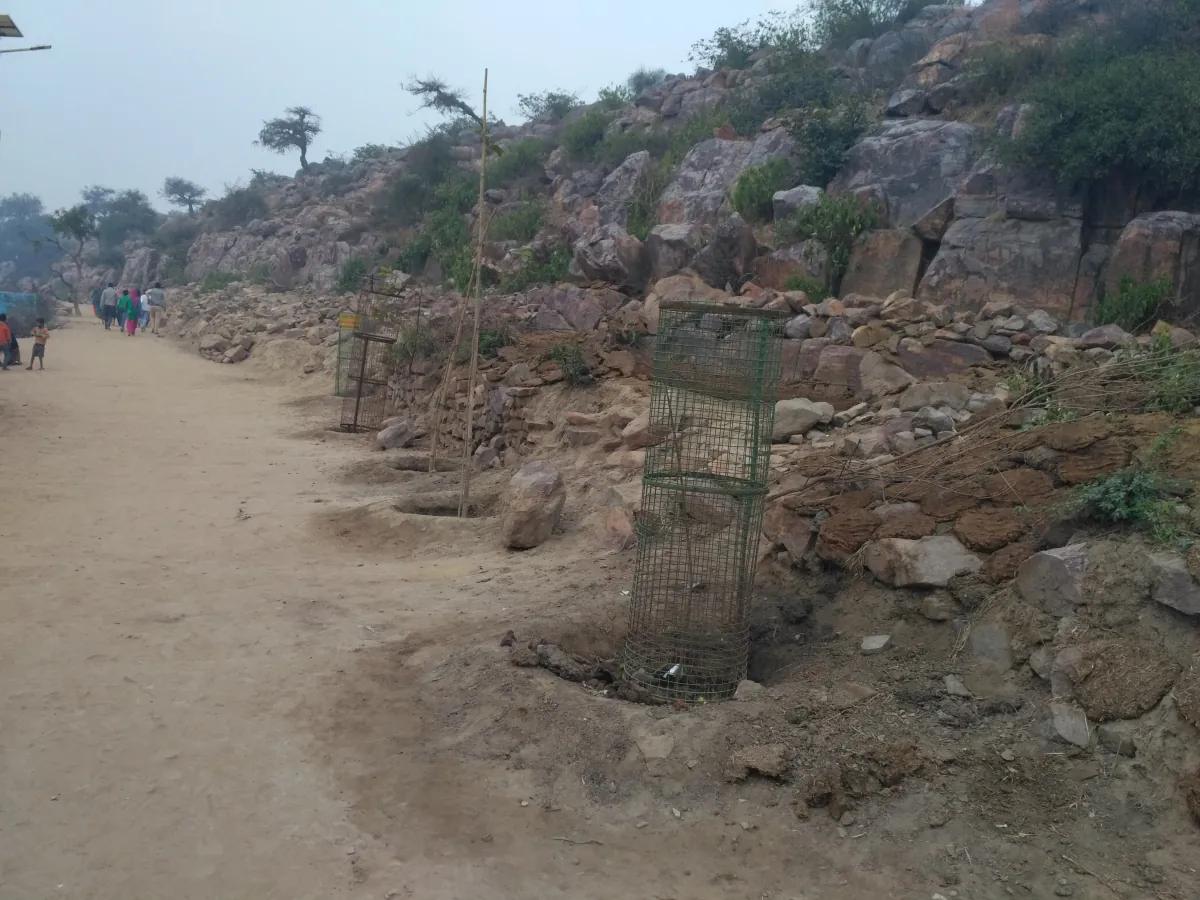
The verse says Krishna raises the hill with one hand, the way a child might hold up a mushroom (SB 10.25.19), and in go the cowherds with their cows, their wagons and whatever else they own (SB 10.25.22). For seven days he holds it there without moving from the spot, untroubled by hunger or thirst (SB 10.25.23). Astonished, Indra calls back his clouds, and the rain stops (SB 10.25.24).
The little finger question
If you grew up with the little finger version, look at the Sanskrit of the verse: it reads ekena hastena, with one hand, and names no finger anywhere (SB 10.25.19). The cowherds repeat it in the next chapter, amazed that a seven-year-old boy had lifted the hill with one hand as an elephant lifts a lotus (SB 10.26.3). The Bhaktivedanta Book Trust edition adds one more detail. Its purport to SB 10.25.19 cites the Harivamsha for the left hand.
Indra says sorry, and Krishna becomes Govinda
Indra comes to Krishna alone. Ashamed, he falls at his feet and asks to be forgiven, and Surabhi, the mother of cows, comes with him (SB 10.27.1 to 2, 10.27.8 and 10.27.13). Then comes the bathing. Surabhi pours her own milk over Krishna, Indra uses Ganga water carried in the trunk of his elephant Airavata, and Krishna receives the name Govinda (SB 10.27.22 to 23).
What goes into the Annakut?
Annakut and Annakut Puja are both names for Govardhan Puja. In many homes the kitchen turns out cereal dishes of wheat and rice, kadhi (a curry made with gram flour) and leafy vegetables, and every bit of it is offered to Krishna.
The Bhagavata gives no count of dishes, but it does fix a sequence.
Offer first, eat after, and feed the brahmanas as part of the offering (SB 10.24.26 to 29).
Doing Govardhan Puja at home, step by step
Family custom decides most of the detail in a home puja.
The steps below keep to what the sources set down for the day; where your elders or your family purohit add more, go with them.
- Shape the Govardhan from cow dung, traditionally a desi cow’s, in whatever form your family has always made, and worship it. On the floor it stands for the hill the cowherds worshipped.
- Set the Annakut before it: wheat and rice dishes, kadhi and leafy vegetables, offered to Krishna before anyone eats. In your own home this repeats the offering of Indra’s stores to the hill (SB 10.24.26 to 29).
- Decorate and worship the cows, and give them fresh grass. In the Bhagavata the cows get their grass before the hill gets its offering (SB 10.24.28).
If your family says a mantra or sings the aarti, the words and their meaning are on our pages of Govardhan mantras with meaning and the Govardhan Maharaj aarti.
What you need for the puja
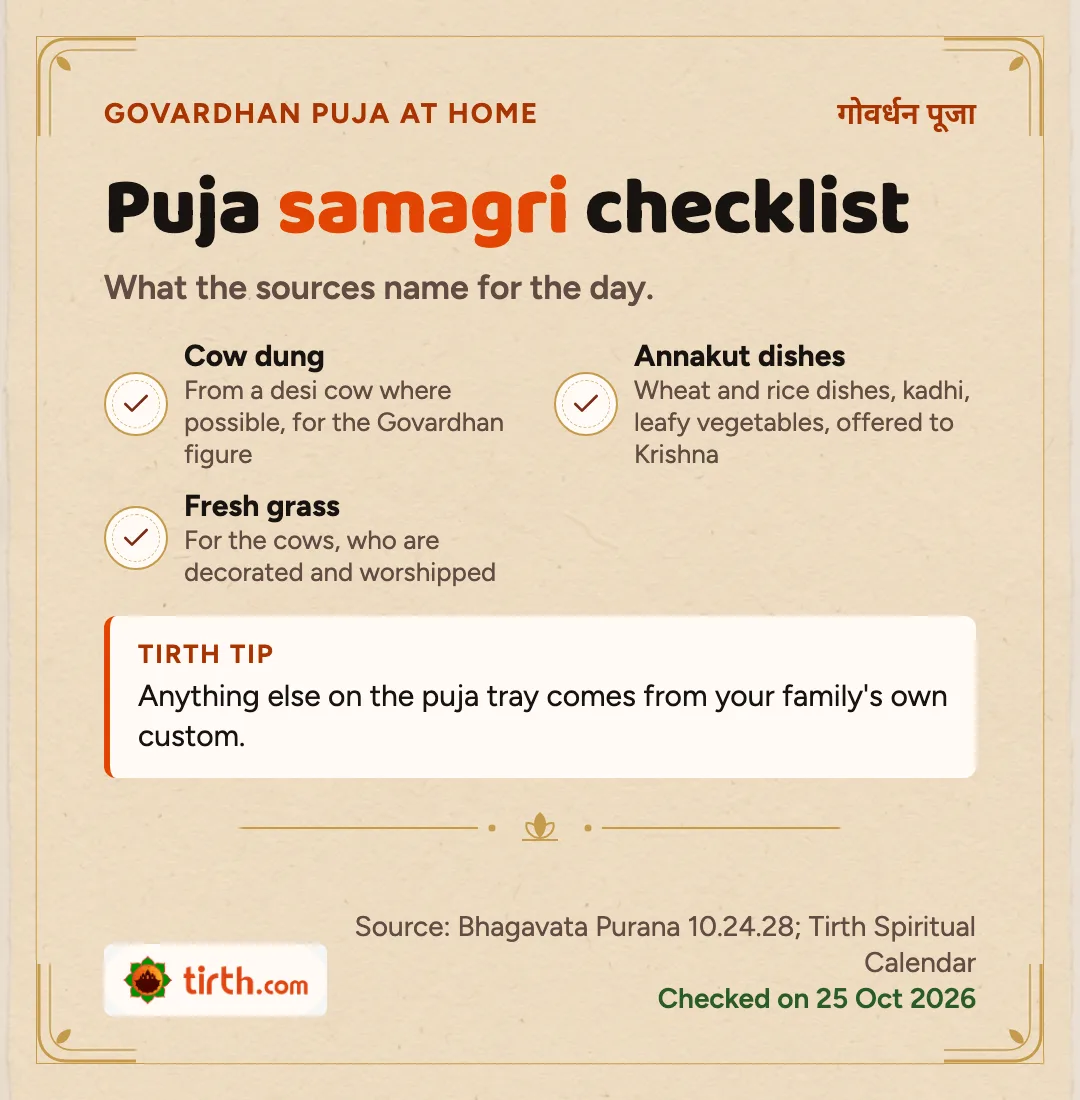
The table lists what the sources name. Whatever else goes on your puja tray comes from your own family’s custom.
| Item | Used for |
|---|---|
| Cow dung (from a desi cow where possible) | Shaping the Govardhan figure |
| Annakut dishes: rice, wheat dishes, kadhi, leafy vegetables | The food offering to Krishna |
| Fresh grass | Feeding the cows at the gau puja |
What the day is called in Maharashtra, Gujarat and Jhabua
One tithi carries several festivals.
Braj keeps the day more widely than anywhere else. The walk round the hill itself, the Govardhan parikrama, has a page of its own.
Maharashtra knows it as Bali Pratipada, or Bali Padva, for Vamana’s victory over King Bali. Bali puja and Govardhan Puja fall together. Gujarat starts its New Year on Kartika Shukla Pratipada, so in most years the two coincide, though depending on when Pratipada begins, Govardhan Puja can fall a day before the Gujarati New Year.
Madhya Pradesh Tourism describes how the Bhil communities of Jhabua, in Madhya Pradesh, call the day Gaay Gauhari and decorate and worship their cattle, and how people fulfilling a vow lie down on the ground so that the cows can step over them.
Published panchangs also list Dyuta Krida, a ritual game of dice, on the same day.
Govardhan Puja in the five days of Diwali
Lakshmi Puja falls on Amavasya and our Diwali guide covers it, while Dhanteras has a guide of its own. Govardhan Puja takes Pratipada and Bhai Dooj takes Dwitiya.
The rule is short. Whichever morning has Pratipada at sunrise gets the puja. When Amavasya carries on past the next sunrise, Pratipada first meets a sunrise a day later and the puja moves with it, leaving a one-day gap between Diwali and Govardhan Puja. Such a gap does happen sometimes. For how it falls this time, see the date card at the top of the page.
Frequently asked questions
Why is Govardhan Puja celebrated?
In place of Indra, Krishna names three things for the cowherds to worship: the cows, the brahmanas and Govardhan Hill (SB 10.24.24 to 25). Two of them still sit at the centre of the day, since the cow dung figure stands for the hill and the cows are decorated and worshipped, while the Annakut goes back to the food he had cooked from Indra’s stores.
What does Annakut mean?
The word joins anna, food, with kuta, which the Monier-Williams dictionary gives both as a heap and as a summit or peak. So it can be read as a heap of food or a peak of food, and on Govardhan Puja that food is offered to the hill.
Did Krishna lift Govardhan on his little finger?
The Bhagavata does not say so. When the cowherds look back on it in SB 10.26.3, their word is karenaikena, with one hand, which matches the ekena hastena of SB 10.25.19.
What is Dyuta Krida?
Dyuta Krida is a ritual game of dice. Many families treat it as a must on Kartika Shukla Pratipada, and the Tirth Spiritual Calendar lists it on the same day as Govardhan Puja.