
Chhath Puja: the four days, the arghya to the Sun and why it is kept
Tirth editorial · 11 Feb 2026 · 9 min read
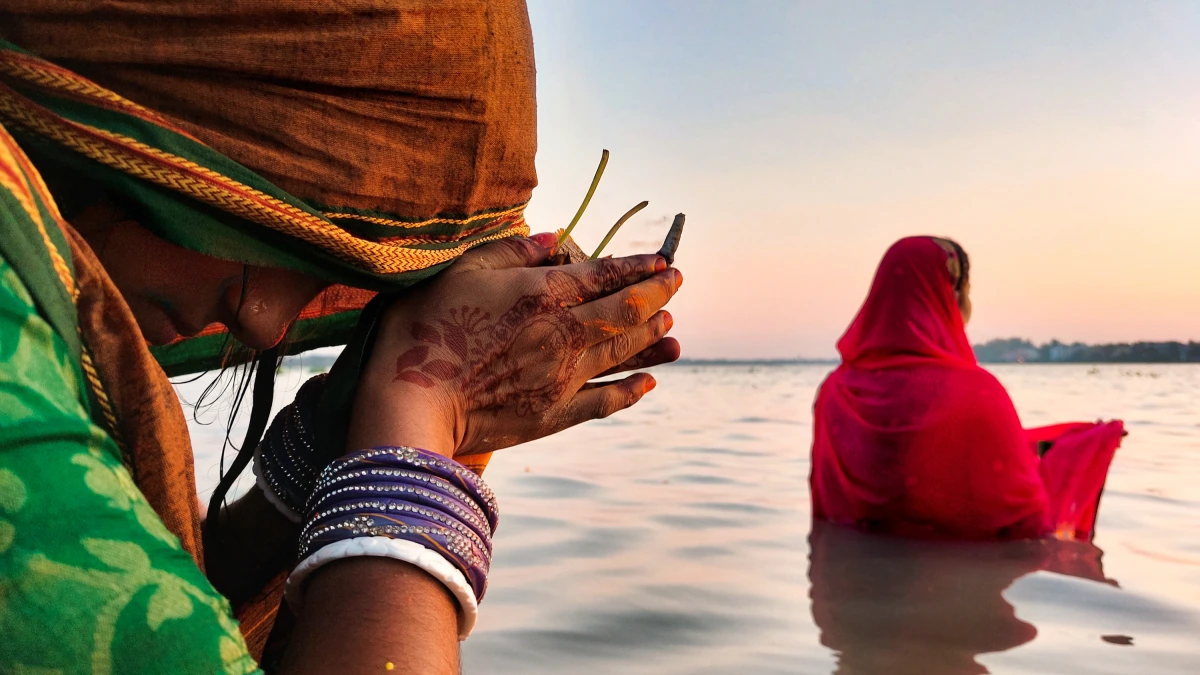
The meaning of Chhath Puja is in its name: Chhath comes from Shashthi, the sixth tithi. It is four days of worship of Surya Dev and Chhathi Maiya around Kartik Shukla Shashthi, with arghya (an offering of water and prasad) to the setting sun on the third evening and to the rising sun on the fourth morning.
On that third evening the vrati offers arghya at the river’s edge from a bamboo soop of thekua, sugarcane, fruit and lit diyas, while Chhath songs are sung around her. She has had no food and no water since the Kharna prasad the evening before.
The festival is kept mainly in Bihar and eastern Uttar Pradesh, and in neighbouring Nepal, and the waterless fast of about 36 hours ends only after the second arghya.
Chhath Puja in 2026: Nahay Khay on Friday, 13 November. Kharna on Saturday, 14 November. Sandhya Arghya on Sunday, 15 November (Shashthi tithi: 11:23 PM on 14 November to 2:00 AM on 16 November; sunset in Patna: 5:01 PM). Usha Arghya and parana on Monday, 16 November (sunrise in Patna: 6:07 AM).
Checked on 26 Oct 2026. Timings for your city in the Tirth Spiritual Calendar
Dates and timings are calculated for Patna using the traditional North Indian panchang. Timings change from city to city; see the Tirth Spiritual Calendar for your location.
Why is it called Chhath, and who is Chhathi Maiya?
The main day falls on Kartik Shukla Shashthi, so the festival is named after that sixth tithi, and Drik Panchang lists it under a handful of other names too: Surya Shashti, Chhathi, Chhath Parv, Dala Puja and Dala Chhath.
Surya Dev receives the arghya at dusk on the third day and again at dawn on the fourth. Chhathi Maiya is the goddess whom families in Bihar and eastern Uttar Pradesh identify with Shashthi Devi, called Devasena in the Puranas and described there as the protector of children. Our page on the Shashti vrat has more on Shashthi Devi.
Drik Panchang notes that Chhath is kept mainly by women, for the well-being of their sons and the happiness of the family.
King Priyavrata’s son and the goddess of the sixth day
The Puranic story behind Chhathi Maiya is told in two texts, the Devi Bhagavata Purana and the Brahmavaivarta Purana. King Priyavrata had a son who was born dead.
Shashthi Devi restored the child to life.
Both Puranas call her the sixth portion of Mula Prakriti (primordial nature) and give her the name Devasena. They tell the goddess’s own story, and it is families in Bihar who see her in the Chhathi Maiya of the riverside worship.
Sita ji, Karna and Draupadi in Bihar’s tellings
Ask an older relative in Bihar why Chhath is kept and the answer may come from somewhere else entirely. Some tellings say Sita ji kept it after the return to Ayodhya, others connect it with Karna, who worshipped Surya every day standing in water, and others again with Draupadi. These are stories handed down by word of mouth in Bihar. The Valmiki Ramayana and the Mahabharata do not describe Chhath, so the tellings belong to the region’s own memory of the festival rather than to a kanda or parva of the epics.
Nahay Khay, Kharna, Sandhya and Usha Arghya: what happens each day
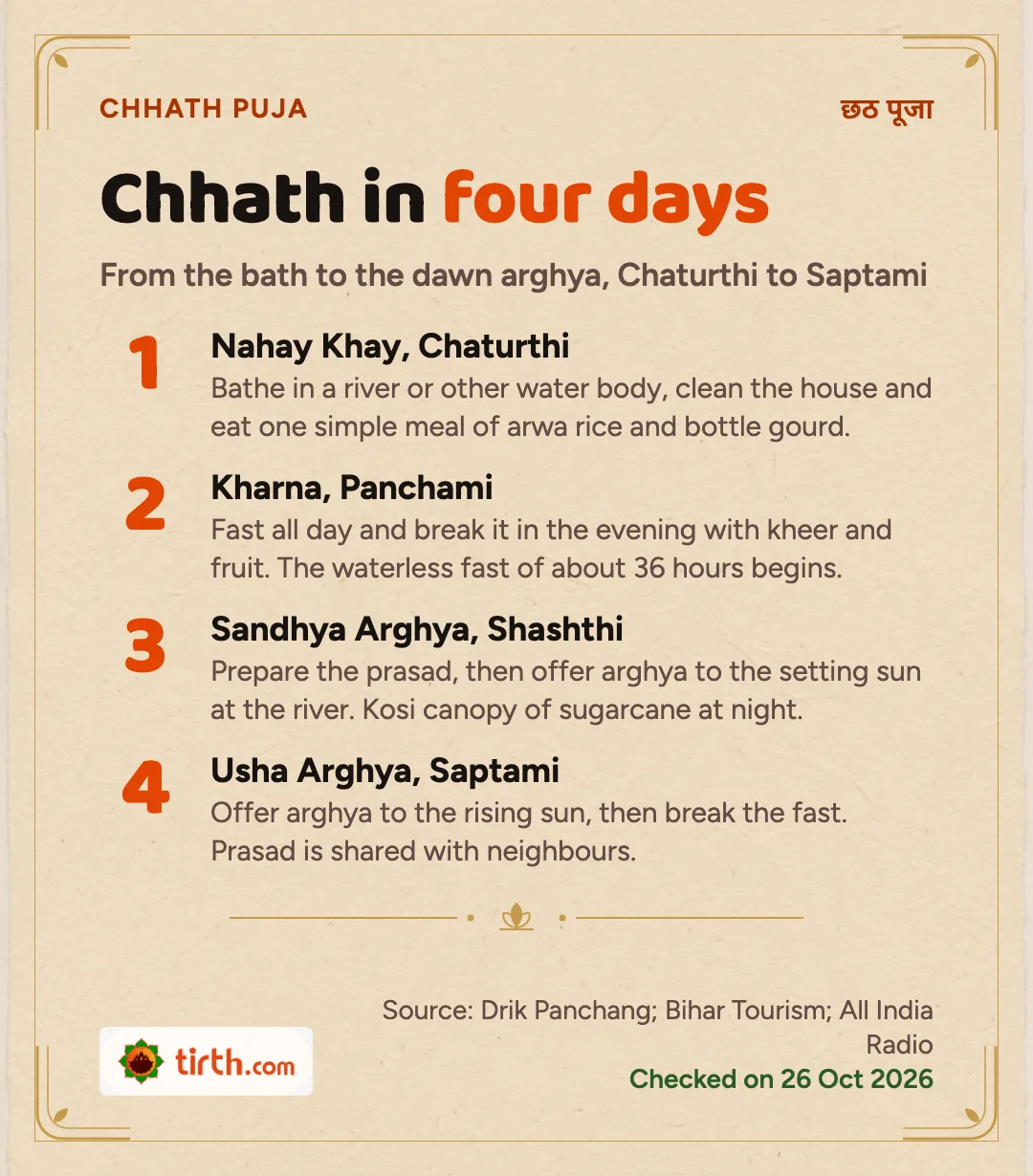
The four days run from Kartik Shukla Chaturthi to Kartik Shukla Saptami. The vrati (the person keeping the fast) eats one meal on the first day, fasts through the second until the evening, and then takes nothing at all until the fourth morning.
| Day | Tithi | Name | What the vrati does |
|---|---|---|---|
| 1 | Kartik Shukla Chaturthi | Nahay Khay | Bathes, cleans the house, eats one simple meal |
| 2 | Kartik Shukla Panchami | Kharna (Lohanda) | Fasts all day, breaks it in the evening with kheer and fruit, then begins the waterless fast |
| 3 | Kartik Shukla Shashthi | Sandhya Arghya | Prepares prasad, offers arghya to the setting sun, Kosi at night |
| 4 | Kartik Shukla Saptami | Usha Arghya | Offers arghya to the rising sun, then breaks the fast |
Day 1: Nahay Khay, the bath and the single meal
Chhath begins with a bath. The vrati bathes in a river or another body of water, and some families carry Ganga water home for the days ahead, then the house is cleaned and after prayers the vrati eats one simple meal, which All India Radio describes as arwa rice with bottle gourd (lauki) curry.
Day 2: Kharna, the evening that starts the long fast
On Kharna, which Drik Panchang also lists as Lohanda, the vrati fasts through the day. In the evening, after puja, the fast is broken with kheer (rice cooked in milk) and fruit, shared as prasad.
Sources differ on whom the Kharna puja is for. The Bihar Tourism Department says the evening worship is of Mother Earth, while Drik Panchang speaks of an offering of food to the Sun God, so households follow what they were taught.
Kharna also starts the long fast. Once the vrati has eaten the Kharna prasad, the nirjala fast begins, with no food and no water for about 36 hours, until the Usha Arghya is done.
Day 3: Sandhya Arghya and the night of Kosi
The third day goes in preparing the prasad. In the evening families gather on the river banks and the vrati offers arghya to the setting sun while Chhath folk songs are sung around her, an offering the Bihar Tourism Department calls the Sanjhiya Arghya. The words said with the water are on our page of Chhath Puja mantras for arghya.
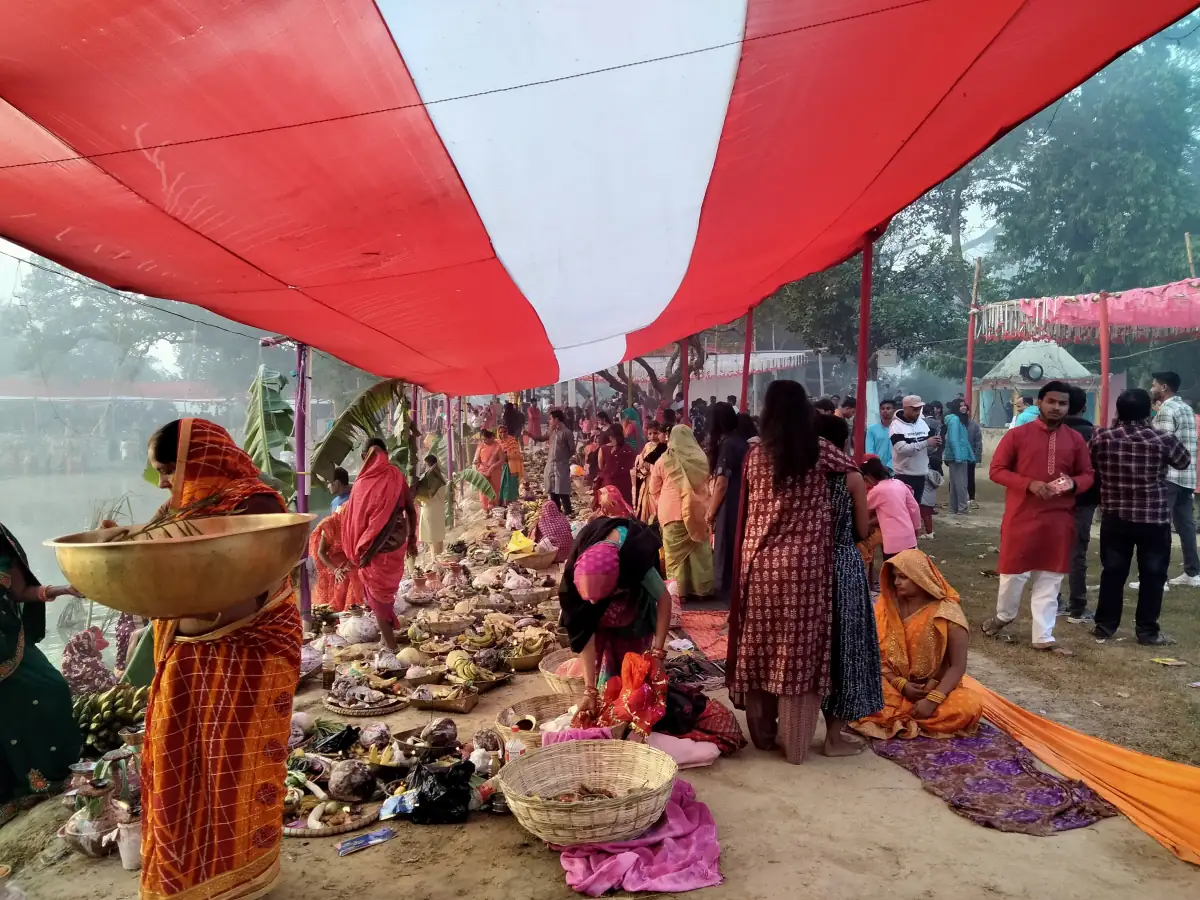
Then comes Kosi, the night ritual. A canopy is made of sugarcane stalks, earthen lamps are lit, and the baskets of prasad are set inside it, as the Bihar Tourism Department describes.
Day 4: Usha Arghya and parana
Families reach the river bank before sunrise, with the prasad. The vrati offers arghya to the rising sun. After that the fast is broken (this is the parana), and the prasad goes round to neighbours and relatives.
Why does Chhath worship the setting sun?
The Bihar Tourism Department points out that Chhath is the one occasion on which the setting sun is worshipped along with the rising sun.
All India Radio describes the Sandhya Arghya as a thanksgiving to the sun for the day’s light, warmth and energy.
For prayers to Surya on ordinary days, the Surya Dev aarti has its own page.
What goes in the Chhath soop besides thekua?
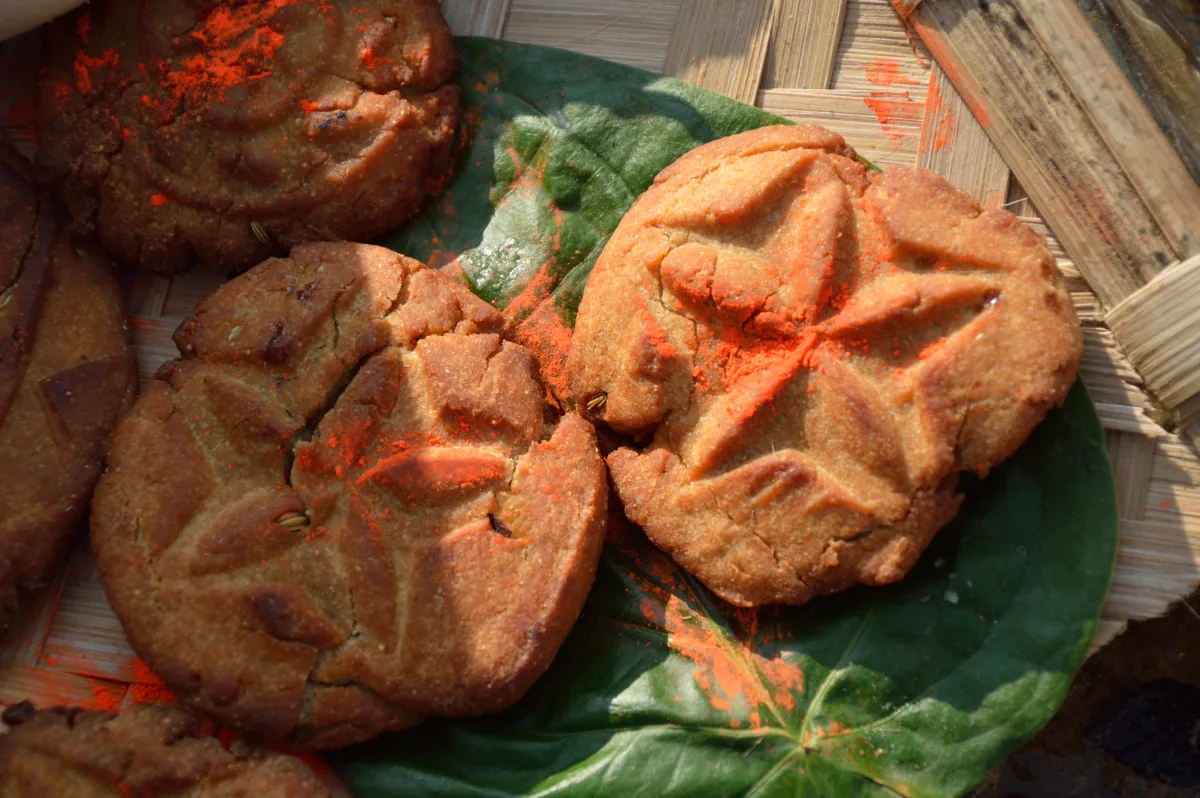
The prasad goes to the ghat in a soop, the flat bamboo winnowing basket, loaded with thekua, sugarcane, fruits and lit diyas. The Bihar Tourism Department describes thekua as a Bihari sweet of whole wheat flour, ghee and jaggery, pressed in a wooden mould called a saancha and deep fried.
| Item | When | What it is for |
|---|---|---|
| Arwa rice and lauki (bottle gourd) curry | Nahay Khay | The single meal after the bath |
| Kheer and fruit | Kharna | Prasad that breaks the day’s fast |
| Soop (bamboo winnowing basket) | Arghya at the ghat | Carries the prasad and diyas to the ghat |
| Thekua | Arghya at the ghat | The main prasad in the soop |
| Sugarcane | Arghya at the ghat and Kosi night | In the soop, and stalks for the Kosi canopy |
| Fruits | Arghya at the ghat | In the soop with the thekua |
| Earthen diyas | Arghya at the ghat and Kosi night | Lit in the soop and inside the Kosi canopy |
| Baskets of prasad | Kosi night | Set inside the sugarcane canopy |
| Ganga water (some families) | From Nahay Khay | Brought home after the first day’s bath |
Chhath vrat rules for the 36-hour nirjala fast
- On Nahay Khay, bathe first, clean the house, and eat one simple meal after prayers.
- On Kharna, fast through the day and break it only after the evening puja, with the Kharna prasad.
- From the Kharna prasad onwards, take no food and no water for about 36 hours.
- Break the fast only after the arghya to the rising sun on the fourth morning, and share the prasad.
What goes into the food is decided by each family, so follow your own family’s practice.
If your mother has kept Chhath for years and you are now taking the vrat over from her, Kharna evening is the line to remember, because from the moment that prasad is eaten nothing passes the lips until after the morning arghya, two nights and a full day later.
Is there a Chaiti Chhath, and what comes before and after Kartik Chhath?
There is. Besides the Kartik observance a second Chhath is kept in spring, which many families call Chaiti Chhath, and the four days on this page are those of the Kartik Chhath.
Kartik Chhath falls in the bright fortnight of Kartik. Diwali and Bhai Dooj come shortly before it, and Kartik Purnima closes the fortnight after it. The month has its own page in the Kartika Mahatmya, and more festivals are in the festival guides section.
Frequently asked questions
What is the meaning of Chhath?
Chhath comes from Shashthi, the sixth tithi. The festival’s main day is Kartik Shukla Shashthi, the sixth day of the bright half of Kartik, which is why it is also called Surya Shashti.
Who is Chhathi Maiya?
Families in Bihar and eastern Uttar Pradesh identify Chhathi Maiya with Shashthi Devi. The Devi Bhagavata and Brahmavaivarta Puranas call Shashthi Devi the sixth portion of Mula Prakriti, also Devasena, the protector of children, and tell how she restored King Priyavrata’s stillborn son to life.
What happens on Kharna?
The vrati fasts all day and breaks the fast in the evening after puja, with kheer and fruit that are then shared as prasad. Eating that prasad starts the waterless fast of about 36 hours that ends after the Usha Arghya.
How long is the Chhath fast, and is water allowed?
No water. The main fast is nirjala and lasts about 36 hours, from the Kharna prasad on the second evening to the arghya to the rising sun on the fourth morning.
What is Kosi in Chhath?
Kosi is the night ritual of the third day. A canopy of sugarcane stalks is made, earthen lamps are lit, and the baskets of prasad are placed inside it, according to the Bihar Tourism Department.
Is Chhath kept twice a year?
Yes. Apart from the Kartik Chhath there is a spring observance that many families call Chaiti Chhath, though the Kartik one is the main festival.
Continue on Tirth
- Chhath Puja in the Tirth Spiritual Calendar, Tirth, for sunrise and sunset in your city.