
Bhagwan
Venkateswara
Venkateswara is described as a form of the god Vishnu. He is also called Venkatachalapati, Srinivasa and Govinda. He belongs to the Vaishnav tradition.
- Vaishnav
- Tradition
About Venkateswara
In the Garbha griha, under the Ananda Nilayam Vimana, the Moolavirat stands on a lotus base. He has four arms. Two hold the shanka and the chakra. One is in the Varada posture and the other in the Kati posture.
The disc is believed to annihilate evil. The conch is presumed to produce the cosmic sound that puts an end to the world's ignorance.
The story of his marriage to Padmavathi is told in the Puranas. Srinivasa was hunting in the forest and chasing a wild elephant. The elephant led him into a royal garden. There Princess Padmavati, an incarnation of Lakshmi and daughter of Aakasha Raja, was picking flowers with her maids.
The Venkateswara mantra is "Om Namo Venkateshaya".
Names carry his meaning. Srinivasa means the one in whom Lakshmi dwells. Govinda means Protector of Cows. In Tamil he is called Elumalayan. In Telugu he is called Ēḍu Koṇḍala Vāḍā. Both mean Lord of the Seven Hills.
- Category
Form
As per en.wikipedia.org, Wikidata
- Tradition
Vaishnav
As per en.wikipedia.org
- Weapons
- Shanka
- Chakra
As per en.wikipedia.org
- Family
Vishnu
As per en.wikipedia.org, Wikidata
Names, forms and symbols
- Arms
Four
As per en.wikipedia.org
- Attributes held
- Shanka
- Chakra
As per en.wikipedia.org
- Mudra
- Varada
- Kati
As per en.wikipedia.org
- Posture
standing posture on a lotus base
As per en.wikipedia.org
Mantras and texts
- Moola mantra
Om Namo Venkateshaya
As per en.wikipedia.org
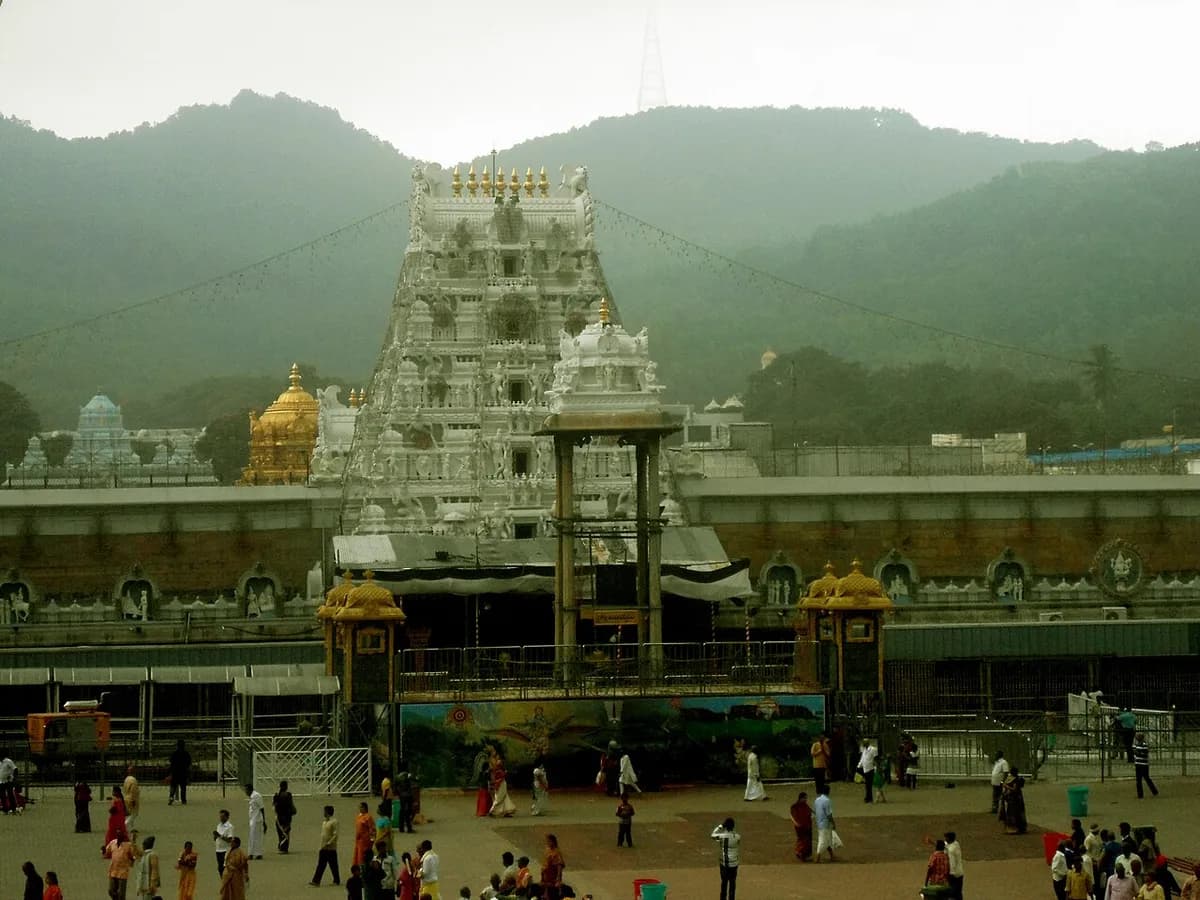
Temples of Venkateswara
More on tirth.com
Temples, towns, the panchang and yatras planned with Tirth.


Sources
Report incorrect information · Something here wrong or out of date? Tell us on WhatsApp and we will check it again.