
Bhagwan
Varaha
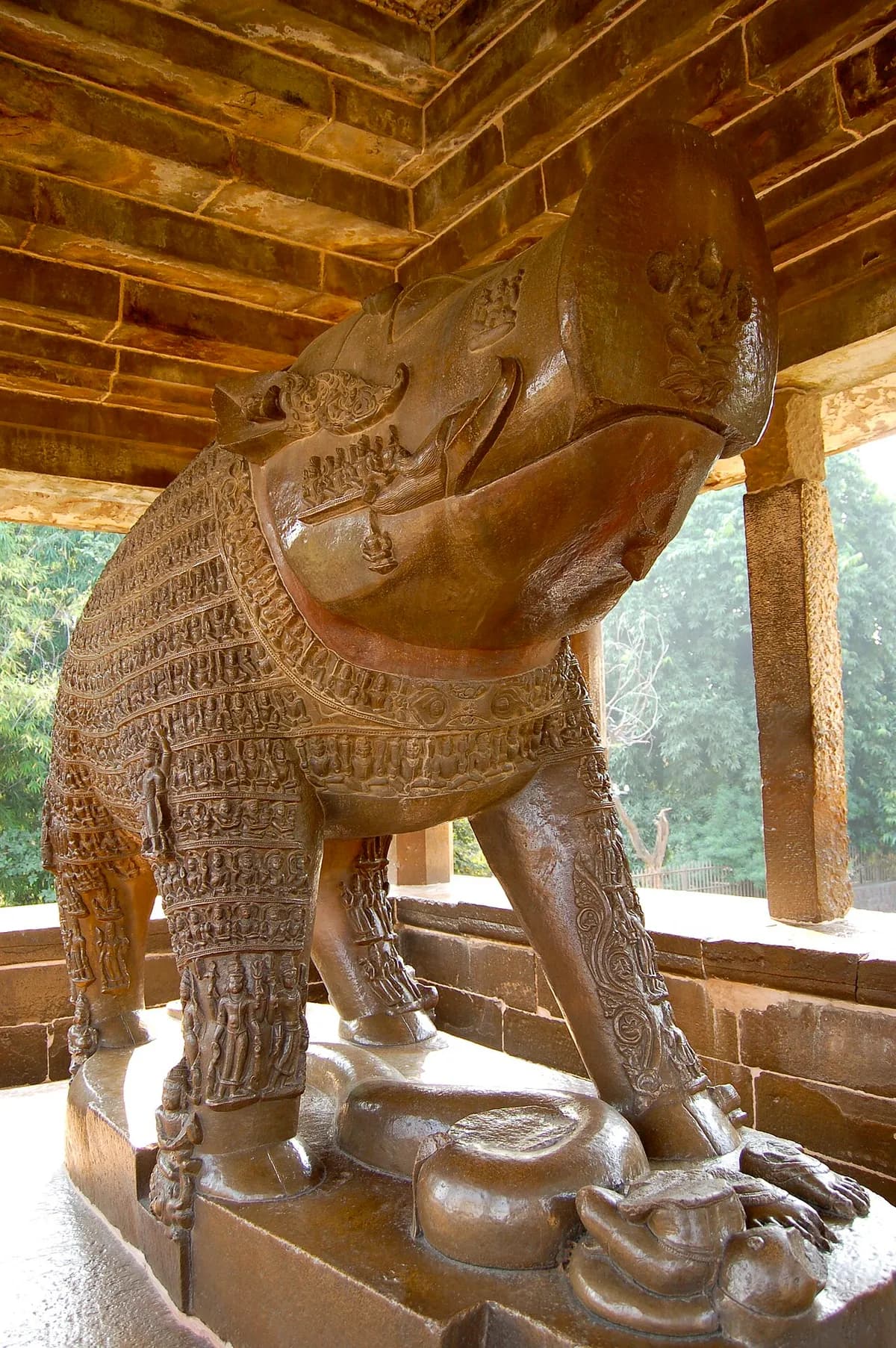
Varaha is the boar avatar of Vishnu. His name means boar in Sanskrit. He belongs to the Vaishnav tradition, rides Garuda and has Vaikuntha as his abode.
- Varaha
- Varaha
- Varaha
- Varaha
- Varaha
- Varaha
- Vaishnav
- Tradition
About Varaha
The rescue of Bhumi begins underwater. The demon Hiranyaksha takes the earth goddess Bhumi and hides her in the primordial waters. Vishnu appears as Varaha to save her. Varaha kills Hiranyaksha, lifts the earth from the cosmic ocean on his tusks and restores her to her place in the universe.
The Harivamsa tells it as a war. The demons led by Hiranyaksha overpower and imprison the gods. Vishnu takes the boar form and slays the demon-king with his Sudarshana chakra after a fierce fight.
The Padma Purana places Varaha at Pushkar. Brahma organizes a great sacrifice there for the benefit of the universe. Varaha appears as the embodiment of Sacrifice to protect it from evil and obstruction. Brahma then asks him to protect Pushkar and dwell there always.
The Venkatacala Mahatmya of the Skanda Purana moves him to Tirupati. After rescuing the earth, Varaha rests in the jungle near the Svami Pushkarini lake as a lustrous boar. The tribal chief Vasu chases him into an anthill and collapses from exhaustion. Varaha possesses him to instruct King Tondaman to build his temple.
Another account says his devotees asked him to stay on earth. Varaha ordered his mount Garuda to bring his divine garden Kridachala from Vaikuntha to the Venkata hills at Tirumala. Later Vishnu discards his boar body and returns to Vaikuntha, because the earth cannot bear the weight of his tusks.
Several of Varaha's names recall the rescue of the earth.
Mahibharta means husband of the earth. Dharanidara means one who upholds the earth. Maha-varaha means the great boar. Kundara means one who pierced the earth. Vaikhana means one who dug the earth. Brihadrupa means one who takes the form of a boar.
He is also called sukara, meaning wild boar. The word appears in the Rigveda and the Atharvaveda.
The Vishnu Purana reads the boar as a sacrifice. His four feet represent the Vedas. His tusks represent sacrificial stakes and his teeth represent offerings. His mouth is the altar, and his tongue is the sacrificial fire.
- Category
Avatar
As per en.wikipedia.org, Wikidata
- Tradition
Vaishnav
As per en.wikipedia.org
- Abode
Vaikuntha
As per en.wikipedia.org
- Vahana
Garuda
As per en.wikipedia.org
- Weapons
Sudarshana chakra
As per en.wikipedia.org
- Family
Vishnu
As per en.wikipedia.org, Wikidata
Temples of Varaha
More on tirth.com
Temples, towns, the panchang and yatras planned with Tirth.


Sources
Report incorrect information · Something here wrong or out of date? Tell us on WhatsApp and we will check it again.